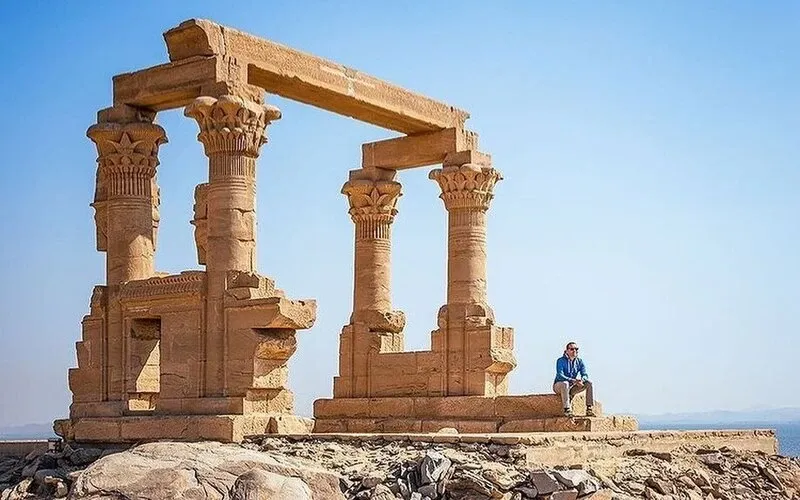
The Temple of Kalabsha is one of Egypt’s most iconic Nubian temples, located near Aswan along the western bank of the Nile. Known for its remarkable preservation and intricate carvings, the temple draws travelers interested in kalabsha temple egypt and kalabsha temple aswan. Visitors exploring temple de kalabsha or browsing new kalabsha photos will find an extraordinary example of Roman-era Egyptian architecture.
Constructed during the reign of Emperor Augustus, the temple was dedicated to the Nubian sun god Mandulis. Its location in southern Egypt near the Aswan region makes it accessible for guided tours, day trips, and Nile cruise itineraries. For travelers wondering where is kalabsha, it is situated just south of modern Aswan and was relocated to protect it from flooding caused by the Aswan High Dam. Visiting the kalabsha temple provides a fascinating insight into Nubian and Egyptian religious life, blending Roman, Egyptian, and Nubian influences.
Whether visiting on a templo de kalabsha tour or including the site as part of a broader Nile adventure, travelers can experience its beautifully preserved reliefs, towering pylons, and sacred sanctuaries. This makes the Temple of Kalabsha a must-see destination for history enthusiasts, photographers, and cultural explorers alike.
History of the Temple of Kalabsha
The Temple of Kalabsha has a rich history spanning thousands of years. Originally constructed during the Roman period in honor of Mandulis, it also incorporates architectural elements from earlier Egyptian traditions. For travelers interested in ancient egypt temples or ancient egyptian temples, Kalabsha offers a clear example of cultural synthesis in Nubia.
The temple was strategically built near Nubian settlements to serve as a religious and political center. Later, during the Christian period, portions of the temple were converted for use as churches, reflecting the continuity of sacred spaces in southern Egypt. Visitors exploring temple kalabsha can see inscriptions and reliefs depicting pharaohs, Roman officials, and deities, illustrating how religious practices adapted over centuries.
The relocation of the temple during the creation of Lake Nasser preserved it from submersion, alongside other Nubian monuments like Abu Simbel. Today, kalabsha temple egypt serves as both a historical site and a tourist destination, providing travelers a tangible connection to Nubian culture and Roman-Egyptian architecture. Understanding the temple’s history enriches any visit, offering insights into the fusion of political, religious, and cultural influences over time.
Location and Accessibility
The kalabsha temple is located near Aswan, on the western side of the Nile River. Its proximity to Lake Nasser and major Nubian sites makes it a convenient stop for travelers exploring southern Egypt. Those searching for kalabsha egypt or temple of qasr dush often include Kalabsha in itineraries alongside other Nubian temples and archaeological sites.
The temple is accessible by road from Aswan or as part of a guided tour, offering travelers flexibility in planning their visit. Its relocation from the original site near the Nile ensured its preservation and created an open, accessible site for visitors. Travelers on kalabsha temple aswan excursions can combine the visit with nearby temples such as Wadi es-Sebua and Dakka for a comprehensive Nubian temple experience.
The surrounding area includes desert landscapes, Nile floodplains, and small settlements, providing scenic views for photography and cultural exploration. Travelers can plan their trip to include templo de kalabsha and other local attractions, making the Temple of Kalabsha a central highlight in southern Egypt travel itineraries.
Architectural Features
The Temple of Kalabsha is renowned for its Roman-era Egyptian architecture and intricate carvings. Its large pylons, sanctuaries, and hypostyle halls showcase the craftsmanship of the period. For photographers, new kalabsha photos capture the temple’s towering gateways and detailed wall reliefs, which depict both deities and historical events.
The temple was originally dedicated to Mandulis, the Nubian sun god, but includes influences from earlier Egyptian temple design. Columns and walls are adorned with hieroglyphs, ritual scenes, and depictions of pharaohs offering tribute to gods. Visitors exploring temple de kalabsha can appreciate the blending of Nubian, Egyptian, and Roman artistic traditions.
Interior spaces of the temple were designed for ceremonial purposes, with sanctuaries and offering halls that demonstrate the sophistication of religious architecture in Nubia. The combination of engineering, artistry, and religious function makes the kalabsha temple a prime example of the ingenuity of ancient temple builders.
Cultural and Religious Significance
The Temple of Kalabsha was a religious center for Nubian communities, devoted primarily to Mandulis. It also reflects the continued adaptation of sacred spaces over time, including Christian use in later periods. For travelers interested in ancient egypt temple history or the cultural integration of Nubian and Egyptian practices, Kalabsha offers a unique perspective.
Reliefs and inscriptions reveal ceremonial practices, divine worship, and political influence, highlighting the temple’s dual role as both a religious and social hub. Visitors exploring temple kalabsha can understand how the temple served as a bridge between Egyptian and Nubian cultural spheres.
The temple’s preservation allows modern travelers to witness these rituals and artistic expressions firsthand. Visiting kalabsha temple egypt enriches the cultural experience, demonstrating the continuity and evolution of religious practices in southern Egypt and Nubia.
Visiting the Temple of Kalabsha
Travelers planning a visit to the Temple of Kalabsha can access it via guided kalabsha temple aswan tours or as part of Nile and Lake Nasser excursions. On-site guides provide historical context, architectural explanations, and highlight key features, ensuring an educational and engaging experience.
Visitors should wear comfortable footwear for walking over stone surfaces and bring sun protection, as the temple is largely exposed to the Egyptian sun. Exploring temple kalabsha allows for detailed observation of reliefs, inscriptions, and ceremonial spaces. Many travelers also combine their visit with photography, using the natural light to enhance new kalabsha photos.
The temple can be explored in a few hours, but combining it with nearby Nubian temples and historical sites creates a full-day cultural journey. Travelers seeking immersive experiences will benefit from guided tours, which provide stories, historical context, and insights not always evident from visual observation alone.
Nearby Attractions and Excursions
The Temple of Kalabsha is part of a rich network of Nubian temples along the Nile and Lake Nasser. Visitors often combine temple de kalabsha with stops at Wadi es-Sebua, Dakka, and Abu Simbel, offering a comprehensive tour of southern Egyptian temples.
Guided excursions frequently include transport, historical commentary, and photography stops. Travelers exploring temples in ancient egypt will find the architectural and artistic similarities and differences between Kalabsha and neighboring sites fascinating. Combining multiple temples provides insight into Nubian religious, cultural, and political life across centuries.
Lake Nasser cruises often include Kalabsha as a highlight, blending scenic beauty with historical exploration. Visitors can enjoy the surrounding desert and Nile landscapes, capturing memorable photos while learning about the region’s rich heritage.
Preservation and Archaeology
The kalabsha temple egypt is a testament to successful heritage preservation. Its relocation during the Aswan High Dam project safeguarded it from submersion, alongside other Nubian monuments. Archaeological studies document reliefs, inscriptions, and structural features, offering insights into Roman-era Egyptian architecture and religious practice.
Scholars study the temple’s egyptian temple interior, wall reliefs, and inscriptions to understand Nubian and Egyptian cultural integration. Preservation efforts ensure that visitors can experience the temple in its near-original condition. For travelers, templo de kalabsha demonstrates how careful relocation and archaeological work protect history while providing educational tourism opportunities.
These efforts highlight the significance of Kalabsha not only as a historic site but also as a model for conserving ancient heritage amid modern developments like the Aswan High Dam.
Why Visit the Temple of Kalabsha
The Temple of Kalabsha offers travelers an unparalleled glimpse into Nubian and Egyptian history, religion, and architecture. Its large pylons, sacred sanctuaries, and preserved reliefs provide insight into ancient ceremonial life. Travelers interested in kalabsha temple egypt or temple of kalabsha will find both educational and visually captivating experiences.
Whether approached via guided tours, Nile cruises, or day trips from Aswan, the temple is an essential stop for those exploring southern Egypt. Its preservation, historical significance, and location near other Nubian sites make it ideal for immersive cultural tourism. For anyone seeking ancient egyptian temples with rich history and stunning artistry, the Temple of Kalabsha is a must-visit destination.