The Egyptian Museum is one of the world’s most treasured cultural destinations and an essential experience for every traveler visiting Cairo. Whether someone is searching for information about the Egyptian Museum Cairo, looking to understand the highlights of the Egyptian Museum in Cairo, or planning an itinerary to explore the museum of Egyptian antiquities in Cairo, this guide offers everything needed to create an unforgettable visit. With thousands of historical pieces, world-famous royal treasures, and rooms filled with ancient stories, the Egyptian Museum remains a cornerstone for anyone eager to explore Egypt’s timeless heritage.
Understanding the Egyptian Museum: History, Structure, and Cultural Value
Visitors stepping into the Egyptian Museum enter a space that connects centuries of history with the vibrant atmosphere of modern Cairo. Located in Tahrir Square, the museum stands as one of the most recognized cultural landmarks worldwide. Travelers interested in the Egyptian Museum Cairo or the broader history of the museum Cairo quickly discover that this iconic building has preserved Egypt’s archaeological narrative for more than a century. It is officially known as the museum of Egyptian antiquities in Cairo, a title reflecting its vast collection and national importance.
Constructed in 1902, the museum was the first purpose-built archaeological museum in the Middle East. The elegant pink building, with its neoclassical design, remains a beloved symbol of Egyptian heritage. For travelers researching the museum of Cairo or Egypt museum, the institution represents a historic gateway to ancient Egyptian civilization. Throughout its corridors, more than 120,000 artifacts are displayed or stored, offering an unparalleled overview of Egypt’s cultural evolution.
One of the most appealing aspects of the museum is its location. Travelers often search for Egyptian museum location when planning their visit, and the answer is convenient: it sits at the heart of downtown Cairo, surrounded by restaurants, hotels, and major attractions. This prime position makes it easy to explore the city before or after touring the museum.
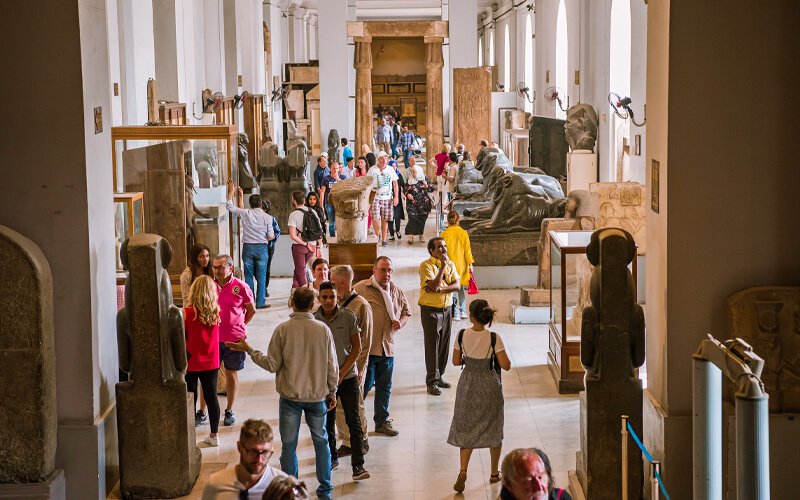
The building contains two floors, with the lower level dedicated to large statues, stone artifacts, sarcophagi, and architectural fragments. The upper level houses delicate objects such as jewelry, papyri, royal treasures, and daily-life items from different eras. For visitors curious about the Egyptian museum of Cairo, this structure offers a clear and enjoyable way to explore the collection, even during a short visit.
The museum has served as the guardian of Egypt’s most important archaeological discoveries, including the royal finds from Karnak, Tanis, and the Valley of the Kings. Travelers researching the Egyptian museum Egypt or the Egyptian museum historical treasures often find that no other museum in the world holds such a concentration of pharaonic artifacts. Whether someone is stepping inside for the first time or returning for another journey through history, the museum’s cultural significance remains unmatched.
Highlights of the Egyptian Museum: Top Halls, Displays, and Visitor Favorites
Travelers visiting the Egyptian Museum Cairo often feel overwhelmed in the best way possible. The museum’s vast assortment of statues, royal items, and ancient masterpieces creates an atmosphere where every corner offers something fascinating. Whether someone is researching Egyptian museum’s most valuable artifacts or looking for Egyptian museum’s most famous artifacts, this section highlights the essential halls that every visitor should see.
One of the most visited sections is the gallery devoted to the treasures of Tutankhamun. Although some items have been transferred to the new Grand Egyptian Museum, many stunning artifacts remain in Tahrir, including the celebrated golden shrines, jewelry, chariots, and ritual items. These treasures remain among Egyptian museum’s most prized possessions, drawing travelers eager to see the objects discovered in the young king’s tomb.
Another major highlight is the collection of royal mummies and funerary equipment. Even though the mummies themselves have been relocated, many of their coffins, wooden artifacts, canopic jars, and funerary tools remain on display. These chambers allow travelers to appreciate the rituals surrounding death and rebirth in ancient Egypt.
For visitors seeking Egyptian museum’s most famous exhibits, the museum’s collection of colossal statues is unforgettable. Gigantic figures of Amenhotep III, powerful representations of Ramses II, and intricately carved deity statues dominate the ground floor. Each piece reflects master craftsmanship and provides insight into the religious beliefs of ancient Egyptians.
Travelers browsing the museum of Egyptian antiquities will also find exceptional Greco-Roman pieces, Coptic artifacts, and rare items from early prehistoric periods. This wide chronological range gives visitors a deeper understanding of Egypt’s long and diverse heritage.
One of the most beautiful rooms in the Egyptian Museum Cairo is the jewelry hall, displaying delicate pieces crafted from gold, precious stones, faience, and glass. These treasures belonged to nobles and queens, including some of the most remarkable pieces found in tombs at Tanis.
The museum also has an impressive papyrus collection, featuring documents that detail everything from agricultural records to religious rituals. Travelers who enjoy ancient texts often find this hall particularly intriguing.
Whether exploring the Cairo Egyptian Museum for the first time or returning to discover new details, the museum’s highlights ensure that every moment is filled with wonder, learning, and meaningful cultural encounters.
Egyptian Museum’s Most Famous Artifacts: Treasures You Shouldn’t Miss
The Egyptian Museum in Cairo contains many of the world’s most iconic archaeological pieces. Travelers often research Egyptian museum’s most famous artifacts before visiting, and the list truly lives up to expectations. These objects represent the artistic, spiritual, and political life of ancient Egypt, making them essential highlights for anyone walking through the museum.
One of the most celebrated treasures is the collection of objects from the tomb of King Tutankhamun. While the famous golden mask has moved to the Grand Egyptian Museum, the museum still houses several extraordinary items, including his gold-inlaid shrines, ceremonial beds, amulets, and chariots. Many travelers consider these works among Egyptian museum’s most valuable artifacts due to their superb craftsmanship and historical significance.
The museum also features the stunning statue of Khafre, carved from diorite and considered one of ancient Egypt’s most perfect royal portraits. It is often listed among Egyptian museum most famous exhibits, symbolizing the artistic mastery of the Old Kingdom.
Another must-see piece is the wooden statue of Ka-Aper, known as the “Sheikh el-Balad” for its lifelike appearance. This incredible work captures the essence of realism in Egyptian art and remains an unforgettable highlight for visitors exploring the museum of antiquities Cairo.
Travelers should not miss the beautifully preserved treasures from the royal tombs of Tanis. These include gold masks, silver coffins, jewelry, and ceremonial vessels that belonged to kings such as Psusennes I. Many travelers are impressed to learn that these items rival the treasures of Tutankhamun in beauty and craftsmanship.
The museum’s upper floor also contains spectacular examples of ancient funerary art. Painted coffins, wooden models of daily life, and shabti figurines reveal the traditions surrounding death, burial, and the afterlife. These detailed pieces belong to both noble families and common individuals, offering insight into different social classes.
For visitors researching Egyptian museum historical treasures, the collection of statues representing deities such as Hathor, Osiris, and Sekhmet is particularly fascinating. Many of these pieces are found in temples across Egypt and were preserved for thousands of years.
Whether you come to admire the artistic mastery of the Old Kingdom, the glittering treasures of the New Kingdom, or the rare discoveries from Late Period tombs, the Egyptian Museum presents a remarkable journey through human history. Each object tells a unique story, making the museum a must-see destination for anyone exploring Cairo.
Layout, Design, and Visitor Experience: Navigating the Museum
Visitors exploring the Egyptian Museum Cairo quickly notice that the building has a unique layout designed to guide travelers through different eras of ancient history. Understanding how the museum is organized helps visitors appreciate its collections more deeply and makes the experience smoother and more enjoyable. Those searching online for Egyptian museum location or Cairo museum of Egyptian antiquities often want to learn how the museum is structured before arriving.
The ground floor features large statues, monumental pieces, sarcophagi, stelas, and architectural elements. Travelers enter through a central hall that immediately opens into galleries filled with towering stone figures. This level offers a dramatic introduction to Egypt’s royal past, showcasing pharaohs, queens, and deities carved in various stone types. Many visitors start their journey here, exploring objects from the Old Kingdom, Middle Kingdom, and New Kingdom.
The upper floor provides a more intimate experience, displaying delicate artifacts such as jewelry, royal treasures, papyri, and small statues. This level is especially appealing for travelers researching Egyptian museum’s most famous exhibits, as many prominent pieces—from burial items to luxury goods—are displayed here. The rooms devoted to the treasures from Tanis and Tutankhamun also draw significant attention.
Travelers visiting the Egyptian Museum in Cairo will find that the museum’s arrangement reflects both chronological and thematic storytelling. Some rooms focus on daily life, featuring tools, pottery, and domestic items. Others focus on religious practices, including items used in temple rituals, funerary customs, and spiritual ceremonies.
Signage throughout the Egyptian museum of Cairo is continually improving, but visitors may still benefit from hiring a knowledgeable guide who can explain the historical background of each section. This ensures a more insightful understanding of the collection and makes the visit more rewarding.
The museum also provides rest areas, café zones, and outdoor spaces where travelers can relax between visits to different halls. While the building itself is historic, renovations and enhancements in recent years have helped improve the visitor experience and preserve the collection.
For travelers concerned about navigating the museum of Egyptian antiquities, clear pathways guide visitors throughout the galleries, making it easy to move from one section to another. Whether you visit for a few hours or choose to spend a full day exploring, the museum’s design ensures that each moment is filled with meaningful discoveries.
Planning Your Visit: Travel Tips, Entrance Details, and Practical Information
Travelers planning a trip to the Egyptian Museum Cairo will benefit from preparation, especially if they wish to explore as much as possible. Since the site is one of the most visited attractions in Egypt, understanding the best visiting times, ticketing options, and recommended routes ensures a smooth and enjoyable experience. Many travelers start by researching Egyptian museum location, discovering that the museum sits prominently in downtown Cairo’s Tahrir Square.
The museum is easily accessible by taxi, ride-sharing services, metro, and tour vehicles. Its central position also makes it simple to combine with other nearby attractions such as the Nile Corniche or downtown markets. Those searching for Cairo Egyptian Museum or cairo museum often appreciate that the museum is surrounded by numerous hotels, cafes, and cultural sites.
When planning your visit, it’s best to arrive early in the morning to avoid crowds. This gives travelers the chance to enjoy quieter galleries and take photographs before the busiest hours. Many people begin on the ground floor, exploring statues and sarcophagi, before moving up to the halls filled with jewelry, royal treasures, and delicate artifacts.
Hiring a certified guide is highly recommended. A knowledgeable guide helps visitors understand the significance behind Egyptian museum’s most famous artifacts and explains the historical context of each section. For travelers who prefer to explore alone, audio guides and printed maps are often available.
Photography rules vary in different halls, so it’s important to follow all guidelines. Backpacks must often be checked, and security procedures are in place to protect the museum’s rare and delicate items.
Travelers visiting the museum of antiquities Cairo should allocate at least three hours for a meaningful visit. However, many enthusiasts spend a half day or even more exploring the countless displays. Food and drink are not allowed inside the galleries, but the museum offers outdoor areas and nearby restaurants where visitors can relax.
Travel agencies specializing in Egypt tours often include the Egyptian Museum as part of city tours or longer multi-day itineraries. This is especially convenient for travelers who want transportation, guides, and timing arranged professionally.
Whether you are exploring the Egyptian museum Egypt for the first time or returning to see new displays, careful planning ensures a memorable and enriching visit filled with historical discovery.
Cultural Significance and Global Impact of the Egyptian Museum
Exploring the Egyptian Museum in Cairo offers travelers a deep connection to Egypt’s global cultural influence. The museum is not only a repository of artifacts; it’s a symbol of Egypt’s identity and a key contributor to worldwide knowledge about ancient civilizations. Travelers who research the Egyptian museum historical treasures or the importance of the museum of Egyptian antiquities often want to understand how the museum contributes to international studies and cultural preservation.
Since its opening in 1902, the museum has been a central institution for Egyptology. Scholars, archaeologists, and historians have used its collections to uncover the stories of pharaohs, queens, workers, priests, and everyday citizens. Items such as papyri, statues, coffins, and jewelry have inspired countless research projects, exhibitions, and publications around the world.
The museum also holds pieces that illustrate the full chronological range of Egypt’s past, from prehistoric tools to Roman-era sculptures. Travelers exploring the Egyptian Museum Cairo often appreciate how these works highlight the evolution of Egyptian society. The museum is a vital link in understanding political, religious, artistic, and technological advancements across thousands of years.
One of the museum’s most significant roles is preserving objects that might otherwise have been lost or damaged. Many discoveries from excavations across the country were transferred to the museum for study, restoration, and display. This legacy continues today, with many items undergoing conservation using advanced methods to ensure their survival for future generations.
Travelers visiting the Egyptian museum of Cairo can sense the museum’s global influence in every gallery. The presence of scholars, students, and tourists from every continent underscores the international fascination with ancient Egypt. Exhibitions borrowed from the museum’s collection have traveled to major institutions worldwide, strengthening cultural exchange and global appreciation.
The museum has also played a key role during periods of political change in Egypt. While adapting to modern challenges, it remains a symbol of national pride and cultural continuity. Visitors exploring the cairo museum of Egyptian antiquities often remark on the powerful connection between past and present, especially when walking among artifacts that have stood for millennia.
For travelers and researchers alike, the Egyptian Museum symbolizes a shared human heritage. Its collections continue to shape global understanding of ancient Egypt, making it a place of admiration, learning, and deep cultural respect.
Why the Egyptian Museum Remains a Must-Visit Destination
Every traveler to Cairo should visit the Egyptian Museum, not only for its unparalleled collection but also for the experience of standing face-to-face with humanity’s oldest stories. Those researching Egyptian museum Cairo or planning a visit to the museum of Egyptian antiquities cairo soon realize that the museum offers something far greater than a typical cultural outing. It is a journey into one of the world’s richest civilizations.
The museum’s atmosphere is unique. It combines a sense of historical authenticity with a tangible connection to the past. Many travelers describe feeling transported in time as they walk through the halls filled with statues, golden treasures, and carved reliefs. Whether you are exploring Egyptian museum’s most famous exhibits or uncovering lesser-known artifacts tucked into display cases, the experience is always immersive and unforgettable.
The museum is also ideal for travelers seeking meaningful, educational experiences. Families, solo adventurers, students, and history enthusiasts all find something compelling within its walls. For those with a deep interest in archaeology or ancient history, the museum offers endless opportunities for discovery. Visitors researching the Egyptian museum’s most prized possessions often leave with a renewed appreciation for the artistry and ingenuity of ancient Egyptians.
In addition to its historical and cultural value, the museum is part of every well-designed Cairo itinerary. Many tour companies include the Egypt museum as a central highlight, pairing it with visits to the Citadel, Old Cairo, or a Nile cruise dinner. Its convenient location makes it easy to combine with shopping, sightseeing, and dining.
Even as new museums emerge, such as the Grand Egyptian Museum, the original Egyptian Museum in Cairo retains its special charm. Its historic architecture, authentic atmosphere, and legacy of more than a century make it a timeless destination. Travelers often return again and again, discovering new treasures on every visit.
Ultimately, the Egyptian Museum is more than a place to view ancient artifacts. It is a bridge between the past and the present, offering travelers a profound connection to one of the most remarkable civilizations in human history. For anyone visiting Cairo, it remains an essential stop—one that enriches every journey and leaves an unforgettable impression.