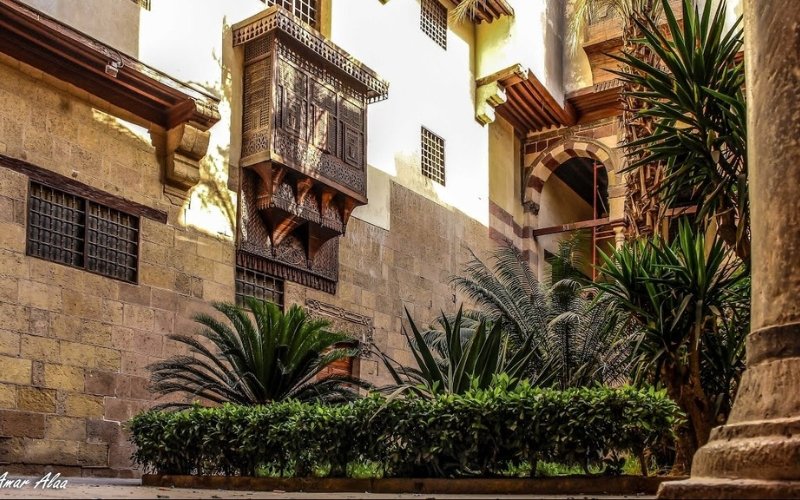
The Bayt Al-Suhaymi is one of Cairo’s most captivating historic houses, offering travelers a window into life during the Ottoman period. Located in the heart of Islamic Cairo on calle al moez el cairo, this traditional house museum allows visitors to explore the architectural ingenuity and cultural richness of 17th-century Egypt. Visitors seeking an authentic experience will find bayt al suhaymi cairo an unmissable destination that blends history, architecture, and local charm.
Originally constructed in 1648, bayt al-suhaymi was the residence of the wealthy merchant Ahmad al-Suhaymi. The house exemplifies the unique characteristics of Ottoman-era homes, including expansive courtyards, intricately carved wooden screens, and ornate mashrabiyas that offer both privacy and elegance. Travelers can enjoy bayt al-suhaymi photos capturing the beautiful interplay of light and shadow through these wooden lattice structures.
The house’s historical significance extends beyond its architecture. Over centuries, it was expanded and adapted by various families, creating a layered history that is evident in its design. Visitors exploring beit el suhaymi or beit el sehemy will notice how different sections reflect both the functionality and aesthetic preferences of their time.
For tourists looking for a full cultural immersion, bayt al-suhaymi cairo provides insights into traditional Cairo life, including residential layouts, decorative motifs, and the social importance of family courtyards. The site is also highly rated in bayt al-suhaymi reviews, with visitors praising its authenticity, preserved interiors, and engaging historical narrative.
Whether for photography, architecture, or historical exploration, the bayt al suhaymi stands as a prime example of Cairo’s rich heritage, offering travelers a rare glimpse into the elegance and lifestyle of a bygone era.
Historical Background of Bayt Al-Suhaymi
The bayt al-suhaymi was originally built in 1648 during the Ottoman period and later expanded in the 18th century, transforming it into one of Cairo’s largest and most prestigious houses. Situated in Islamic Cairo, the house reflects the social and economic status of the Suhaymi family, who were influential merchants of their time. Visitors exploring bayt al-suhaymi cairo can see how the house’s design accommodated both daily life and social gatherings, a hallmark of Ottoman residential architecture.
Historically, the house was constructed with a central courtyard, around which rooms were arranged for living, hosting, and entertaining. Its design emphasizes privacy while showcasing the wealth and refinement of its owners. Travelers visiting al suhaymi or suhaymi will notice the blend of functional and decorative elements, from water features in the courtyard to elaborately carved wooden screens.
Over the centuries, the house has witnessed Cairo’s changing urban landscape. Despite the growth of the city, the bayt al-suhaymi has maintained its historical integrity, allowing modern visitors to step back in time. The house has been preserved as a museum, offering bayt al-suhaymi tickets to tourists eager to explore its interiors and learn about its history.
The house also provides a fascinating insight into family life in 17th- and 18th-century Cairo. Rooms were carefully designed for gender separation, social hierarchy, and domestic rituals, reflecting the values and customs of the era. Visitors to beit el suhaymi can explore these spaces to understand the cultural and social fabric of Ottoman Egypt.
For those interested in Islamic architecture and historical preservation, the bayt al-suhaymi cairo represents a significant case study, offering a well-preserved example of residential design and family life in one of the world’s most historic urban centers.
Architecture and Design of Bayt Al-Suhaymi
The bayt al-suhaymi architecture is a masterpiece of Ottoman-era residential design, featuring multiple floors, expansive courtyards, and intricate wooden elements. The house is centered around a large courtyard with a garden and fountain, providing a serene environment that contrasts with the bustling streets of calle al moez el cairo. Travelers exploring bayt al-suhaymi cairo will notice how natural ventilation, light, and water features were ingeniously integrated to enhance comfort and beauty.
The house includes multiple levels connected by wooden staircases, with rooms arranged for private family use and public gatherings. Elaborately carved mashrabiyas allow sunlight to filter through while maintaining privacy, making bayt al-suhaymi photos particularly striking for visitors interested in architectural photography.
Interior spaces feature decorative plasterwork, carved wooden ceilings, and traditional furniture, providing insight into the aesthetic preferences of Cairo’s affluent families during the Ottoman period. Exploring beit el suhaymi or beit el sehemy reveals how social customs, privacy, and elegance were prioritized in residential design.
The house also includes a reception hall, a prayer room, and multiple living quarters, demonstrating the functional diversity of Ottoman homes. Visitors can explore al-rifai mosque cairo — sorry, I mean for this house, the bayt al-suhaymi layout, which combines aesthetic charm with practical living spaces.
For architecture enthusiasts, al suhaymi offers a tangible experience of traditional techniques, materials, and decorative motifs. Its preservation allows travelers to appreciate how the house has withstood the test of time while maintaining its original character.
Visiting Bayt Al-Suhaymi: Traveler Tips
Travelers planning a visit to bayt al-suhaymi cairo should arrive early to avoid crowds and fully enjoy the tranquil atmosphere of the courtyards. Tickets are affordable and can be purchased on-site, with information available for guided tours to provide historical and architectural context. Visitors with a keen interest in photography will find bayt al-suhaymi photos opportunities throughout the house.
Comfortable shoes are recommended due to the uneven flooring and staircases connecting different levels. Respectful attire is suggested, as the house reflects cultural and historical traditions. Exploring bayt al-suhaymi reviews, visitors consistently highlight the immersive experience, the intricate details of the mashrabiyas, and the serene ambiance of the courtyards.
The house is ideally located on calle al moez el cairo, allowing tourists to explore nearby historic sites, traditional markets, and cafes. Travelers can combine their visit with a walk through the heart of Islamic Cairo, making the trip both educational and culturally enriching.
Whether visiting independently or with a guide, bayt al-suhaymi offers a comprehensive experience of Cairo’s Ottoman-era residential architecture and social history. It is a must-see for anyone interested in the cultural and historical layers of Cairo, providing a rare glimpse into the lifestyle of elite families from centuries past.