Understanding Ancient Egyptian Creation Myths opens a doorway into one of the world’s most influential belief systems. These stories shaped every aspect of spiritual life, inspired monumental architecture, and influenced how people viewed themselves in relation to the gods. For travelers exploring ancient temples today, knowing the origins of these myths adds depth to every carving, symbol, and inscription. Within these sacred narratives, you find a blend of philosophy, astronomy, ritual, and the desire to explain how the universe came into existence—long before modern science existed. When visitors approach sites such as Heliopolis, Hermopolis, or Memphis, they are stepping into the mythological landscapes where these powerful ideas first emerged.
What the Ancient Egyptians Believed About the Beginning of Everything
Ancient Egyptian beliefs about creation vary because different cities preserved their own traditions, forming what scholars call Egyptian creation myth cycles. These stories appear in temple texts, pyramid inscriptions, priestly teachings, and later religious literature. When reading an egyptian creation story today, it’s important to remember that the ancient Egyptians did not search for a single universal explanation. Instead, they embraced multiple narratives, each reflecting the identity of its region and temple. This helps modern travelers understand why temples across the country showcase different symbols, gods, and origin scenes.
At the heart of every ancient egyptian creation story is the concept of a primeval ocean known as Nun—a limitless expanse of dark, silent waters. Everything existed within this watery void before creation began. Many egyptian creation myths describe the moment a mound of earth emerged from the water, symbolizing the first land rising from chaos. This mound is why so many temples include elevated platforms or architectural features meant to resemble the first hill of creation.
The ancient egypt creation story also introduces the idea of divine speech—that creation happened through intention, sound, or sacred words. This theme appears across myths, whether through the sun god emerging from chaos, the creator deity speaking the world into being, or a cosmic egg cracking open.
Travelers visiting temples often notice scenes showing lotus flowers, birds, or rays of light—all of which relate to egyptian story of creation themes. The lotus, for example, symbolized the moment the sun god first opened his eyes. In some ancient egypt creation myth traditions, the god emerged from this blooming flower, bringing light to the world.
If you are exploring museums in Cairo, London, or Berlin, ask your guide to show you artifacts that relate to the egyptian mythology creation story. Many statues, texts, and reliefs reference the birth of gods, the formation of land, and the organization of the universe. These symbols help answer common questions such as how were humans created in Egyptian mythology, a story usually linked to the god Khnum, who shaped humans on a potter’s wheel.
The egyptian origin story isn’t simply about beginnings—it reflects how the ancient Egyptians saw balance, order, and harmony. Understanding this enriches every trip to temples like Karnak or Luxor, where the architecture mirrors these cosmic principles.
The Heliopolitan Creation Myth: Atum, Shu, Tefnut, and the Ennead
The most widely recognized egyptian creation myth summary comes from Heliopolis, one of the ancient world’s greatest religious centers. Travelers today can still visit the archaeological site of Heliopolis near modern Cairo, where the famous obelisk of Senusret I still stands as a remnant of the once-thriving solar cult. This myth explains creation through the god Atum, who emerged from Nun on the first mound of earth.
Atum is described as a self-created god, representing completion and totality. Many ancient egyptian creation myths portray him as standing upon the primordial hill, surrounded by the endless sea. He begins creation by bringing forth two children—Shu (air) and Tefnut (moisture). These two are essential elements: air for breathing, moisture for life. Their union leads to the next generation, Geb (earth) and Nut (sky), who symbolize the physical world being formed.
This family of gods expands into a larger group known as the Ennead of Heliopolis, including Osiris, Isis, Set, and Nephthys. As visitors learn during temple tours, these gods appear frequently in tomb paintings, sarcophagi, and statues. The Heliopolitan myth also ties into some of the most famous egyptian myths, such as the story of Osiris and Isis.
If you’re reading any egyptian creation story summary before your trip, you’ll notice a recurring theme: creation through desire or thought. Atum creates the world through intention, representing the divine power to bring order out of chaos. Travelers who tour sites like the Egyptian Museum will see numerous artifacts depicting Atum wearing the double crown, symbolizing his authority over all creation.
The egypt creation myth from Heliopolis is essential for travelers visiting solar temples, particularly those dedicated to the sun god Ra. It helps explain why many temples are aligned with solar events, such as sunrise or sunset. The famous Abu Simbel temple, for example, is aligned so that sunlight illuminates statues inside the sanctuary twice a year—a concept rooted in solar worship that comes from creation mythology.
Learning the Heliopolitan myth provides deeper insight into egyptian creation myths as a whole, especially the idea that life emerges through a sequence of divine generations. It also gives travelers a framework for interpreting the countless depictions of air, sky, earth, and moisture within temple design.
The Hermopolitan Creation Myth: The Mysterious Ogdoad and the Cosmic Egg
The ancient egyptian creation myth from Hermopolis introduces a different cast of gods known as the Ogdoad—eight deities representing the elements of chaos before creation. This myth fascinates many travelers because it uses poetic and symbolic imagery. The Ogdoad includes four male-female pairs, each symbolizing a different aspect of the primordial universe: darkness, infinity, hiddenness, and the boundless waters. If you visit Hermopolis Magna near modern-day El Ashmunein, you will walk through the land where these philosophical concepts first developed.
The Hermopolitan myth describes how these eight gods worked together to form a cosmic egg, inside which the creator god was born. In some traditions, this creator emerged as a shining bird—often described as a goose or Bennu bird, a symbol later associated with rebirth and resurrection. Many visitors ask what the egyptian god of creation looked like in this myth; the answer depends on which version you read, but the Bennu bird is one of the most beautiful and symbolic interpretations.
This myth answers the question what is the Egyptian creation story by presenting creation as an emergence from hidden potential. Travelers exploring temples near El Minya will see references to lotus flowers and eggs, both tied to this creation theme. The lotus symbolizes emergence, while the egg symbolizes birth.
The Hermopolitan myth also explains how the sun first rose, bringing light into the world. Light is a recurring theme in the egyptian mythology creation story, reflected in temple rituals where priests reenacted the dawn. When travelers visit temple sanctuaries, they often notice that the innermost chambers are kept dark, representing the primordial chaos before creation.
Many egyptian creation myth summaries emphasize that Hermopolis contributed philosophical ideas rather than genealogical gods like those in Heliopolis. This makes Hermopolis essential for travelers interested in mythology, symbolism, and cosmology. Museums often display artifacts featuring frogs and serpents—symbols associated with the Ogdoad.
For travelers wanting a deeper understanding of ancient egyptian creation myths, the Hermopolitan version offers a mystical and symbolic perspective that differs from the more political and genealogical stories of other regions.
The Memphite Creation Myth: Ptah, Speech, and the Power of Imagination
The Memphite creation myth is one of the most intellectually sophisticated egyptian creation myths. It centers on Ptah, the god of craftsmen, architecture, and creation through thought and speech. Travelers visiting the open-air museum in Memphis often see statues and stelae dedicated to Ptah, including the famous colossus of Ramesses II nearby.
According to the Memphite myth, outlined on the Shabaka Stone, creation happened not through physical birth but through the mind and speech of Ptah. Everything—from gods to nature to humanity—began as a thought in Ptah’s heart and became real through his spoken word. This idea frequently appears in an ancient egypt creation myth summary because it reveals a deep philosophical concept: creation through intention.
For travelers, this myth becomes especially meaningful when exploring sites built with remarkable precision, such as Saqqara. The step pyramid complex reflects the Memphite tradition’s emphasis on architecture, order, and divine planning.
If you explore the egyptian story of creation in museums, look for depictions of Ptah as a mummy-shaped figure holding a staff. This form symbolizes stability and eternal life. Many visitors ask, how were humans created in Egyptian mythology? In the Memphite myth, humans exist because Ptah imagined them, named them, and spoke them into reality.
This egypt creation story connects directly to temples dedicated to crafting, sculpture, and skilled labor. Ptah was the patron of artisans, so sculptors often prayed to him before carving statues. Travelers can see inscriptions of Ptah in tombs of craftsmen in Deir el-Medina, the village where workers who built the Valley of the Kings lived.
The Memphite myth shows that ancient Egyptians believed thoughts and words shaped the world. For visitors, this story adds meaning to hieroglyphic inscriptions across Egypt. Every carving was more than art—it represented speech made eternal. Understanding this gives travelers a richer perspective when exploring temple walls or sarcophagi covered in sacred writings.
The Theban Creation Myth: Amun and the Hidden Origins of the Universe
The Theban myth places Amun at the center of creation. When travelers explore Karnak Temple, they walk through the world’s largest religious complex dedicated to this hidden and powerful god. Many ancient egyptian creation myths describe Amun as a mysterious, unseen force behind all existence.
In the Theban egyptian creation myth, Amun creates the world silently and invisibly. His name means “The Hidden One,” reflecting his role in the egyptian mythology creation story. Unlike Ptah, who creates through speech, or Atum, who emerges physically, Amun creates through invisible power.
This idea influenced Thebes’ prosperity during the New Kingdom, when its priests became influential figures in society. Travelers visiting Luxor Temple or the Avenue of Sphinxes will encounter many references to Amun. Understanding his myth helps explain why Thebes became such a significant religious center.
The Theban myth often blends with the Heliopolitan myth, showing how egyptian creation myths evolved over time. In some stories, Amun becomes the hidden form of Ra, merging the idea of invisibility with the sun’s visible light. For travelers, this theme appears in temple artwork that shows Amun-Ra wearing tall plumed crowns.
The ancient egypt creation story from Thebes also emphasizes renewal. Amun’s connection to fertility, life, and hidden energy appears in scenes showing him blessing pharaohs. Travelers touring the tombs of the Valley of the Kings will see many depictions of Amun guiding the deceased into the afterlife.
This myth also offers a spiritual answer to how were humans created in Egyptian mythology. Some versions say Amun shaped humanity through breath or divine energy flowing through his hidden essence. These ideas appear in temple hymns preserved on walls across Upper Egypt.
Understanding the Theban myth enriches a traveler’s experience at major archaeological sites. Every pylon, obelisk, and column at Karnak reflects Amun’s role in sustaining creation. Many visitors find the immense Hypostyle Hall—its forest of columns—symbolic of the ordered universe Amun helped structure.
For travelers seeking deeper meaning in egyptian creation stories, the Theban perspective reveals how the ancient Egyptians linked creation with political power, divine kingship, and the spiritual world.
How Humans, Gods, and the World Were Believed to Develop
Across all egyptian creation myths, a recurring question appears: how were humans created in Egyptian mythology? Different traditions provide different answers. In many egyptian creation stories, the god Khnum forms humans on a potter’s wheel. Travelers visiting Elephantine Island near Aswan can see temples dedicated to Khnum, whose artistic role symbolized the crafting of life.
In other myths, humans arise from the tears of the sun god Ra. This poetic image reveals how deeply connected people were to their gods—humanity was born from the emotions of divine beings. Travelers visiting solar temples will often see this story referenced in reliefs that depict Ra’s journey across the sky.
The egyptian story of creation also explains how the world developed. The sky goddess Nut arches over the earth god Geb, creating the physical structure of the cosmos. Air, represented by Shu, stands between them. Travelers who explore tomb ceilings, especially in the Valley of the Kings, often see Nut painted across the entire chamber, swallowing the sun in the evening and giving birth to it at dawn.
The egyptian mythology creation story addresses natural cycles, time, and seasons. The Nile’s flood, for example, was considered part of the cosmic order set in motion at the moment of creation. Travelers visiting Aswan High Dam or touring Nile cruises often learn that ancient priests measured the flood as part of their religious calendar.
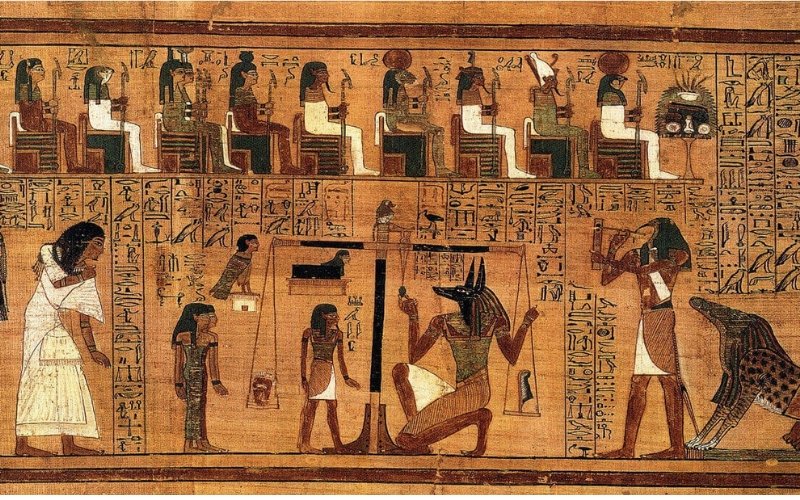
Many travelers are curious about the afterlife, and creation myths help explain it. The egypt creation myth forms the foundation of beliefs about rebirth, judgment, and resurrection. When visiting tombs, travelers see scenes based on these myths, including Osiris presiding over the weighing of the heart.
The different egyptian creation myths also emphasize harmony and balance, ideas represented by Ma’at. Ma’at symbolizes truth, justice, and cosmic order. Travelers exploring temples dedicated to pharaohs will frequently find Ma’at depicted as a woman with a feather on her head, sometimes offered to the gods by the king.
These creation stories do more than explain the past—they shape how travelers understand ancient temples and artifacts. Each myth adds context to carvings, wall scenes, and statues across Egypt, enriching the overall travel experience.
Creation Myths in Temples, Tombs, and Sites You Can Visit Today
Travelers exploring Egypt will encounter egyptian creation myths everywhere—from temple reliefs to museum collections. Understanding these stories turns every visit into a deeper experience. Many egyptian creation story summary inscriptions appear in temples like Karnak, Luxor, Dendera, Edfu, and Philae.
The Temple of Edfu, for example, features detailed scenes describing the victory of the sun god over chaos, reflecting the beginning of creation. The Temple of Dendera includes astronomical ceilings that highlight cosmic order. Museums display artifacts with lotus flowers, eggs, and birds related to egyptian creation myths.
Traveling to Heliopolis, visitors can walk through the birthplace of the Heliopolitan creation story. In Memphis, they can learn about Ptah’s role in shaping the universe. Hermopolis and its surrounding areas reflect the Ogdoad and the cosmic egg.
Even Nile cruises incorporate egypt creation story themes, particularly when visiting Kom Ombo, which emphasizes the duality present in many myths. Human creation scenes also appear in temples dedicated to Khnum at Esna.
Museums often include carvings or texts that correspond to many of the keywords travelers search for today, such as egyptian creation myth summary, egyptian origin story, ancient egyptian creation, and egyptian mythology creation. These displays help bridge the gap between ancient belief and modern understanding.
Understanding these myths gives travelers more appreciation for egyptian creation, egyptian story of creation scenes, and even modern cultural references. Many egyptian mythology creation story elements appear in festivals, local traditions, and artistic representations throughout the country.
For travelers exploring deeper into ancient egyptian creation story themes, guides often highlight details that more casual visitors miss—symbols carved into columns, astronomical alignments, or artistic depictions of Nun and the primordial mound.
No matter where your journey takes you, these myths offer insight into the culture, values, and imagination that shaped one of the world’s greatest civilizations. They turn travel into a richer experience, connecting you directly with the ancient stories carved into the temples you walk through.