The Al Rifai Mosque stands as one of Cairo’s most iconic religious and historical landmarks. Located near the bustling Cairo Citadel, it attracts travelers interested in architecture, history, and Islamic culture. Visitors exploring al-rifa’i mosque, cairo, egypt will discover a monument that embodies both spiritual significance and architectural grandeur, reflecting centuries of Egyptian history.
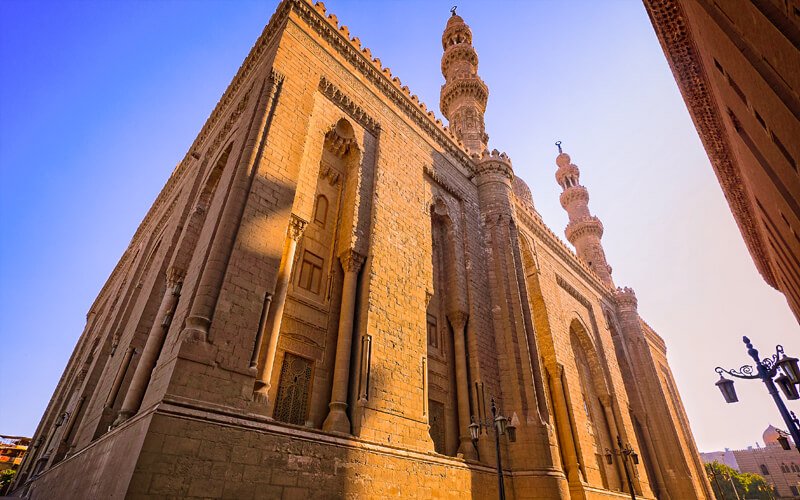
The mosque, often called rifai mosque, is renowned for its impressive scale and intricate design, making it one of the most visually striking mosques in Cairo. Tourists visiting al rifai mosque cairo can admire its detailed facades, majestic domes, and towering minarets, which make it a favorite spot for photography enthusiasts searching for al-rifa’i mosque photos.
Constructed in the late 19th and early 20th centuries, the al-rifa’i mosque was built to honor the royal family and religious figures, combining traditional Islamic architecture with modern construction techniques. Travelers exploring el rifai mosque or al-rifa’i mosque will find a harmonious blend of Mamluk, Ottoman, and European architectural styles, reflecting Cairo’s rich cultural layers.
The mosque is not only a place of worship but also a resting place for members of the Egyptian royal family, making it a site of historical importance. Visitors to al-rifa’i mosque cairo history can learn about the burials and royal connections that make the mosque unique. Exploring rifayi masjid provides a full sense of its significance, offering both spiritual serenity and historical insight.
For travelers seeking a deeper understanding of Cairo’s Islamic heritage, visiting al-rifa’i mosque cairo offers a remarkable opportunity to explore one of Egypt’s most famous mosques, known locally as mosque of cairo. Whether for religious reverence, historical exploration, or architectural photography, the al rifai mosque is a must-see destination in Egypt’s capital.
Historical Background of Al Rifai Mosque
The al rifai mosque was commissioned in 1869 by Khedive Ismail and completed in 1912, making it a relatively modern yet historically significant structure. Its construction was intended to complement the nearby Mosque-Madrassa of Sultan Hassan, creating a monumental religious and architectural ensemble near the Cairo Citadel. Travelers visiting al-rifa’i mosque cairo can appreciate its historical placement and its connection to Cairo’s urban and spiritual development.
Known as famous mosque in cairo and famous mosque in egypt, the mosque was designed to serve multiple purposes: a place of worship, a mausoleum for the royal family, and a symbol of national pride. The mosque’s strategic location and scale reflect the ambitions of Egypt’s rulers during the late 19th century, providing travelers an insight into the era’s architectural and political landscape.
The mosque houses tombs of notable figures, including members of the Muhammad Ali dynasty, making it a prominent burial site, referred to in some sources as al-rifa’i mosque burials. Visitors exploring al-rifa’i mosque cairo history will gain a deeper understanding of its royal connections and the significance of its design.
Historically, the mosque also served as a model for modern Islamic architecture in Egypt. Its combination of traditional Mamluk elements, such as pointed arches and minarets, with more contemporary construction techniques, allowed it to stand as a bridge between old and new architectural styles. Tourists exploring egypt mosque cairo or cairo egypt mosque can see how the mosque has influenced subsequent religious buildings in the city.
Understanding the historical context of the al-rifa’i mosque enhances the visitor experience, allowing travelers to appreciate not only its aesthetic beauty but also its role in Cairo’s rich cultural and spiritual heritage.
Architecture and Design of Al Rifai Mosque
The al rifai mosque architecture is a testament to Cairo’s rich architectural heritage. Covering a large area near the Cairo Citadel, it features high domes, elegant minarets, and detailed stonework that captures the eye. Travelers exploring al rifai mosque cairo will notice the symmetry, geometric patterns, and intricate detailing that make it a masterpiece of Islamic design.
The mosque’s minarets rise gracefully, echoing the design of nearby historical mosques, while its domes provide an impressive silhouette against Cairo’s skyline. For those interested in al-rifa’i mosque photos, the structure offers countless opportunities to capture the interplay of light and shadow across its expansive courtyards and façades.
Inside, the mosque features spacious prayer halls adorned with marble floors, ornate wooden ceilings, and detailed calligraphy. Visitors exploring rifai mosque cairo or al-rifa’i mosque cairo can appreciate how the interior spaces are designed to create a sense of serenity and spiritual focus.
The mosque also serves as a mausoleum, housing tombs of prominent figures, which are elegantly integrated into the architectural plan. Travelers exploring al-rifa’i mosque burials will find that these tombs add an additional layer of historical and cultural significance to the visit.
Its proximity to the Mosque-Madrassa of Sultan Hassan allows for comparative exploration of Mamluk and modern Islamic architecture, giving tourists a broader understanding of Cairo’s architectural evolution. For travelers, visiting al rifa i mosque or mezquita de al rifa’i provides a comprehensive experience of both spiritual ambiance and architectural magnificence.
Visiting Al Rifai Mosque: Traveler Tips
Travelers planning a visit to al rifai mosque cairo should prepare to explore both its architectural splendor and historical significance. The mosque remains an active place of worship, so modest dress covering shoulders and knees is required. Comfortable shoes are recommended due to the mosque’s expansive courtyards and stone flooring.
Early morning visits allow tourists to experience a peaceful atmosphere and capture ideal al-rifa’i mosque photos. Guided tours offer detailed historical and architectural insights, explaining the mosque’s construction, royal burials, and its role as a cultural landmark. Exploring rifai mosque with a knowledgeable guide enriches the experience, revealing hidden details that casual visitors might miss.
The mosque’s location near the Cairo Citadel allows travelers to combine visits to other historic sites, such as the mosque of cairo and nearby markets, creating a full day of exploration. Visitors can learn about the mosque’s strategic placement, its influence on Cairo’s urban development, and its contribution to Islamic architecture in Egypt.
Photography enthusiasts will find countless opportunities for capturing the mosque’s grandeur, from the soaring minarets to the ornate domes and courtyards. Attending prayer sessions respectfully adds to the cultural experience, providing insight into the mosque’s living traditions. Exploring al-rifa’i mosque cairo location offers both historical depth and visual inspiration, making it a must-visit site for anyone traveling to Cairo.