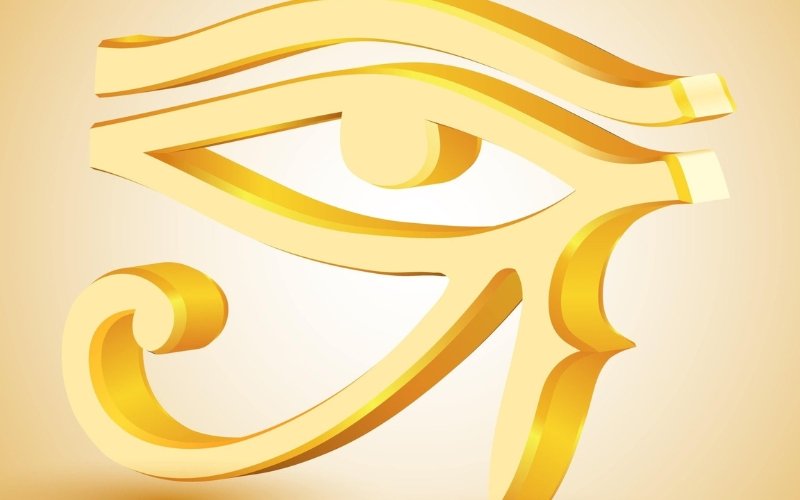
The Eye of Ra is one of the most iconic and powerful symbols in ancient Egyptian mythology, captivating travelers, historians, and spiritual enthusiasts alike. Its presence is found in temple carvings, papyrus paintings, museum artifacts, and even jewelry, symbolizing divine protection, authority, and the far-reaching power of Ra, the sun god. Many travelers researching before their visit ask questions like “eye of ra meaning”, “the eye of ra”, “ra symbol”, or “eye of rah meaning” to better understand what they are about to see. The Eye represents more than a symbol—it embodies the divine power of Ra in a form that can act independently, protect, and assert authority.
The eye of rah, also referred to as eye of raw or the eye of rah, was believed to protect the pharaoh, punish enemies, and maintain cosmic order. Understanding the story and significance of the Eye transforms visits to Egyptian sites from casual sightseeing into an immersive cultural experience. Travelers often compare the eye of ra symbol to the eye of horus meaning, curious about their similarities and differences. While both serve protective purposes, the Eye of Ra is linked directly to the sun god and his power, representing strength, fury, and divine oversight.
For travelers visiting temples like Karnak, Dendera, Edfu, or the Valley of the Kings, knowing the Eye’s spiritual and symbolic importance enhances their understanding of the carvings, hieroglyphs, and artwork surrounding it. From fiery depictions of lion-headed goddesses to subtle carvings of Ra’s all-seeing eye, each encounter becomes more meaningful. This guide explores the origins, symbolism, mythology, and sites where travelers can experience the Eye of Ra firsthand, while naturally incorporating key search terms such as ra eye, amun-ra symbol, egyptian eye, and ra sun god symbol.
Origins of the Eye of Ra
The eye of ra originated as a manifestation of Ra’s divine power. Unlike ordinary symbols, it was believed to have agency—it could act independently to punish or protect. Ancient Egyptians described the Eye as both an extension of Ra and as a goddess capable of enacting his will on earth. Some myths say that when humans rebelled against Ra, he sent his Eye to punish them, which often took the form of Sekhmet, the lion-headed goddess. This destructive aspect illustrates why the Eye is associated with fire, strength, and divine authority.
Over time, the Eye’s mythology expanded to include protective and nurturing aspects. In other versions, the Eye became Hathor, goddess of joy, music, and healing. Travelers exploring temples like Dendera or Philae may notice depictions of lion-headed, solar-connected goddesses—these are visual representations of the Eye’s dual nature: both fierce and benevolent.
The Eye was also associated with the sun’s daily journey across the sky. Each sunrise and sunset reflected the Eye’s vigilance and all-seeing power, symbolizing Ra’s eternal presence. It was depicted on temple walls, coffins, and jewelry to ensure protection, divine favor, and balance. Travelers encountering these symbols in museums or on guided tours can appreciate their layered meanings, from cosmic oversight to moral authority.
The origin story of the Eye of Ra also intersects with other solar symbols, such as the amun-ra symbol and the ra sun god symbol. These connections help travelers contextualize why Egyptian temples are adorned with multiple symbols that celebrate Ra’s omnipotence. Understanding the origins of the Eye helps visitors see it not just as art, but as an emblem of ancient Egyptian cosmology and belief in divine justice.
Symbolism of the Eye of Ra
The eye of ra symbol carries multiple layers of meaning that enriched Egyptian mythology and daily life. First and foremost, it represents protection. Pharaohs, temples, and sacred objects often bore the Eye to ward off evil forces and guarantee divine oversight. Travelers visiting tombs or temples can spot the Eye in painted murals or carved reliefs, signaling that divine protection is present in that location.
Another meaning is retribution. In myths, the Eye punishes wrongdoers, demonstrating Ra’s authority. This dual role—guardian and punisher—explains why the eye of rah meaning often includes both fierce and nurturing imagery. Lion-headed goddesses, solar disks, and protective amulets all convey these traits, ensuring travelers recognize the Eye’s importance in both religious and social contexts.
The Eye also symbolizes authority and power. As a representation of Ra’s all-seeing vision, it reinforced the pharaoh’s legitimacy and the cosmic order. When you see the Eye accompanying hieroglyphs of kings or queens, it indicates divine endorsement. Visitors can witness this in sites like Luxor Temple or the Karnak complex, where repeated carvings reinforce Ra’s supreme presence.
Additionally, the Eye embodies healing and rejuvenation. In some myths, it has the power to restore life or protect against illness. This aligns with Egypt’s emphasis on maintaining balance and harmony in both spiritual and physical realms. Travelers can appreciate this meaning when exploring artifacts like amulets or temple decorations, where the Eye is painted in vibrant colors as a symbol of vitality.
The Eye’s multi-faceted symbolism explains why people search for phrases like eye of ra spiritual meaning, ra egyptian god symbol, egyptian eye, and eye of horus meaning. Travelers gain insight into ancient beliefs while connecting with modern interpretations of protection, authority, and cosmic order.
The Eye of Ra in Mythological Stories
The eye of ra features prominently in ancient Egyptian myths. One famous story involves the Eye leaving Ra to punish humanity when humans defied him. In this form, often depicted as Sekhmet, the Eye unleashed destruction but also symbolized necessary balance, ensuring that humans respected divine authority. This dual role—punisher and protector—is central to understanding why the Eye appears on temples, amulets, and monuments.
In other myths, the Eye represents Ra’s vigilance over the cosmos. When it is separated from him, chaos ensues; when reunited, harmony is restored. The journey of the Eye is mirrored in the sun’s path across the sky, reinforcing its connection to life-giving and life-taking forces. Travelers can see depictions of this story in temples like Dendera, where murals illustrate the goddess moving across the heavens with fiery intensity.
The Eye is also linked to other gods, including Hathor, Bastet, and Tefnut. Each goddess embodies a different aspect of the Eye’s power, from nurturing and healing to protective aggression. Visitors seeing the amun ra symbol or the ra eye in temple carvings can identify which manifestation of the Eye is represented, enhancing their understanding of the symbolism.
Myths of the Eye of Ra also intersect with the eye of horus, which represents protection and restoration. Understanding these differences helps travelers appreciate the specific role of each symbol in rituals, funerary practices, and temple iconography.
Variations of the Eye: Ra vs Rah vs Raw
Travelers often encounter different spellings of the Eye: eye of ra, eye of rah, and eye of raw. These variations reflect differences in translation and transcription from hieroglyphs. Despite the spelling differences, all refer to the same concept: the all-seeing, protective, and sometimes destructive power of Ra.
In museums and travel guides, you may also see the eye of the rah, eye if rah, or amon ra eye. All these references point to the same symbol, emphasizing protection, cosmic authority, and divine oversight. Recognizing these variations helps travelers interpret hieroglyphs and guidebooks more accurately.
The spelling variations also highlight the challenges of translating ancient Egyptian texts. Hieroglyphic vowels were not written, and different scholars rendered sounds in various ways. Whether you see eye of rah meaning or eye of ra spiritual meaning, the underlying concepts remain consistent: protection, authority, vengeance, and balance.
The Eye of Ra as a Protective Symbol
One of the most enduring aspects of the Eye is its role as a protective symbol. Temples, tombs, amulets, and statues often incorporate the Eye to guard against evil spirits, misfortune, and cosmic disorder. Travelers exploring sites like Luxor Temple or Saqqara can easily identify carvings of the Eye as part of larger protective compositions.
Amulets featuring the eye of ra symbol were worn by the living and placed with the dead to ensure safety in life and the afterlife. This protective aspect connects directly to searches like egyptian eye and ra symbol, highlighting the symbol’s relevance both in ancient times and modern travel contexts.
The Eye also protected the pharaoh, reinforcing divine authority. As visitors explore temples and tombs, they notice repeated motifs of the Eye alongside depictions of kings, indicating that the pharaoh’s power was sanctioned by Ra.
Depictions in Temples and Artifacts
The Eye of Ra appears across numerous temples, tombs, and museum collections. Travelers visiting these locations can see examples in:
- Karnak Temple – Wall carvings showing Ra’s Eye in ceremonial contexts.
- Dendera Temple – Murals depicting lion-headed goddesses representing the Eye.
- Luxor Museum – Amulets and statues illustrating the Eye’s protective and healing functions.
- Valley of the Kings – Tomb paintings with the Eye overseeing the afterlife journey.
- Saqqara – Reliefs where the Eye appears alongside solar symbols.
Each location demonstrates a slightly different aspect of the Eye, from aggression to healing, offering travelers a comprehensive understanding of its significance.
Spiritual Meaning and Modern Interpretation
The Eye of Ra carries a spiritual meaning that extends beyond ancient myths. It represents vigilance, moral order, protection, and divine insight. Travelers and spiritual seekers alike explore its symbolic layers, often asking eye of ra spiritual meaning or eye of ra meaning. Modern practitioners interpret it as a symbol of awareness, self-protection, and connection to divine forces.
The Eye also appears in jewelry, tattoos, and decorative items, bridging ancient symbolism with contemporary culture. Travelers may encounter souvenirs featuring the Eye, providing a tangible connection to their visit and the mythology they studied.
Comparison with the Eye of Horus
The eye of horus meaning differs slightly from the Eye of Ra. While both serve protective purposes, Horus’ Eye symbolizes restoration, healing, and balance, whereas Ra’s Eye embodies power, authority, and divine retribution. Travelers exploring temples may see both symbols side by side, understanding that each serves a unique function within Egyptian cosmology.
The Eye of Ra in Modern Travel Experience
For travelers, recognizing the Eye of Ra enhances every visit to Egypt. By understanding its myths, symbolism, and variations, visitors can connect with temple art, museum artifacts, and cultural narratives on a deeper level. Guided tours often highlight the Eye in temple reliefs, explaining its role in mythology and protection.
Visitors can also appreciate the Eye in souvenirs, books, and museum displays, linking the ancient symbol to modern storytelling and cultural preservation.
Conclusion
The Eye of Ra remains one of the most compelling symbols in Egyptian history, blending protection, divine authority, and cosmic oversight. Travelers who encounter the eye of ra, eye of rah, or eye of raw can now appreciate the symbol’s origin, mythology, and spiritual significance. Its presence in temples, tombs, and artifacts offers a window into the worldview of the ancient Egyptians, where gods, humans, and cosmic forces were deeply intertwined.
Understanding the Eye transforms a visit to Egypt from a visual experience into an insightful journey, allowing travelers to see not just carvings and murals, but the essence of a civilization that revered the power of sight, vigilance, and divine authority.