The Ibn Tulun Mosque is one of Cairo’s most magnificent Islamic monuments, offering travelers a glimpse into Egypt’s rich architectural and religious history. Built in the 9th century, it is recognized as the oldest mosque in Cairo, reflecting the legacy of Ahmad Ibn Tulun, the founder of the Tulunid dynasty. Visitors exploring the mosque of ibn tulun cairo will be captivated by its vast courtyards, towering minarets, and intricate design that has stood the test of time.
The mosque is not only a spiritual center but also a cultural landmark, often referred to as the largest mosque in Cairo and admired for its architectural brilliance. Travelers visiting ibn tulun mosque cairo egypt can enjoy guided tours that explain its historical significance, architectural elements, and role in Islamic education. The site is also popular for mosque of ibn tulun photos, capturing the harmony between its historical structure and open courtyards.
For tourists, understanding the ibn tulun story adds depth to their visit. Ahmad Ibn Tulun envisioned the mosque as a symbol of his dynasty’s power and a center for worship and community life. Today, the masjid ibn tulun stands as a testament to his vision, blending early Islamic architecture with features unique to the Egyptian landscape.
The ibn tulun cairo area surrounding the mosque adds to its charm, offering historic streets, markets, and neighborhoods that reflect the old city’s atmosphere. Travelers who explore ibn tulun mosque cairo fully gain not only a sense of the mosque’s spiritual importance but also a deeper understanding of Cairo’s historical and cultural heritage.
Whether for architecture, photography, or history, visiting the mosque ibn tulun provides an unforgettable experience, making it a must-see destination for anyone exploring Egypt’s Islamic landmarks.
Historical Background of Ibn Tulun Mosque
The ibn tulun mosque was commissioned by Ahmad Ibn Tulun in 876 CE and completed in 879 CE. As the founder of the Tulunid dynasty, Ibn Tulun sought to establish his power in Egypt while creating a center for worship and learning. The mosque, also known as the mosque of ahmad ibn tulun, was constructed with architectural principles that set it apart from earlier mosques in the region.
One of the mosque’s most notable features is its resilience; it has survived more than a millennium, including natural wear and urban development in Cairo. Travelers exploring ibn tulun cairo will notice its enduring structure, massive courtyards, and elegant minarets, which reflect the ingenuity of early Islamic architects. The mosque’s design influenced later mosques throughout Egypt and North Africa.
Historical accounts describe how Ibn Tulun intended the mosque to serve both religious and social purposes. Its large courtyard accommodated community gatherings, while its prayer halls facilitated worship for thousands. Today, visitors can join guided tours of ibn tulun mosque cairo egypt to learn about these aspects of the mosque’s early role in Egyptian society.
The mosque’s history is closely tied to the Tulunid dynasty, which marked a period of cultural and political development in Egypt. Travelers examining the mosque of ibn tulun cairo can appreciate how the mosque’s construction reflected both the dynasty’s influence and the architectural trends of the era. The mosque has undergone restorations, preserving its historic charm while ensuring that its cultural and spiritual functions continue.
Understanding the historical context of the ibn tulun mosque cairo allows visitors to see beyond its physical beauty, recognizing its significance as a center of faith, learning, and social cohesion that has shaped Cairo’s Islamic heritage for over a thousand years.
Architecture and Design of Ibn Tulun Mosque
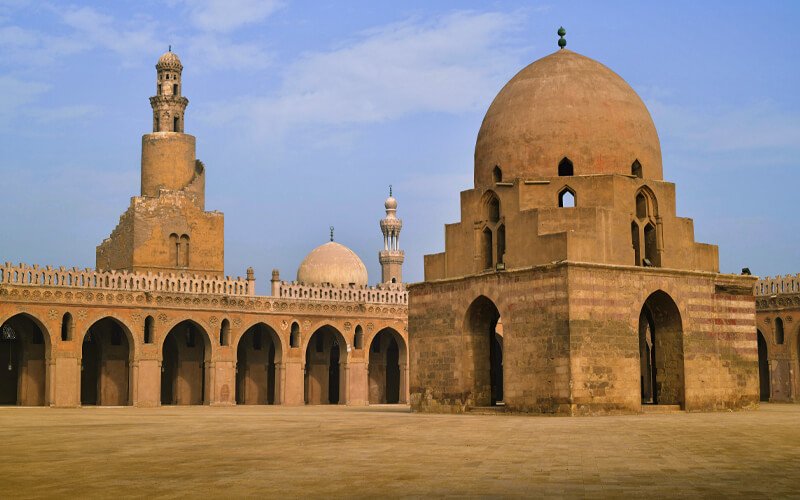
The ibn tulun mosque architecture is renowned for its unique blend of early Islamic design and local Egyptian influence. Covering a vast area, it is considered the biggest mosque in Cairo in terms of land, and its design emphasizes spaciousness, symmetry, and grandeur. Visitors exploring mosque of ibn tulun will notice the large rectangular courtyard, surrounded by arcades, with a central open space that enhances the mosque’s sense of scale.
The mosque features a famous spiral minaret, inspired by the Great Mosque of Samarra in Iraq, which distinguishes it as an architectural landmark. Travelers photographing the mosque will find mosque of ibn tulun photos particularly striking from elevated angles, capturing the harmony between the minaret, courtyard, and prayer halls. The minaret’s design reflects both aesthetic and functional purposes, allowing the call to prayer to reach the surrounding area.
Inside, the mosque’s prayer hall features rows of arches supported by columns, many of which were repurposed from older structures, demonstrating the use of spolia in early Islamic architecture. Visitors touring masjid ibn tulun can observe the intricate wooden ceilings, ornate doors, and geometric designs that exemplify the craftsmanship of the period. The mosque’s ibn tulun mosque cairo plan highlights the careful organization of spaces, including areas for worship, teaching, and social gathering.
The mosque also includes ablution facilities, a gallery for female worshippers, and multiple entrances that reflect practical design considerations for a large urban congregation. Travelers exploring ibn tulun mosque cairo will see how the structure balances monumental scale with human functionality, creating a welcoming and spiritually uplifting environment.
Whether visiting for architecture, history, or photography, the ibn tulun mosque offers a comprehensive glimpse into early Islamic architectural innovation and Cairo’s rich cultural heritage.
Visiting Ibn Tulun Mosque: Traveler Tips
Travelers planning a visit to ibn tulun mosque cairo egypt should prepare to explore both its architectural beauty and historical significance. The mosque remains an active place of worship, so modest attire covering shoulders and knees is required. Comfortable shoes are recommended due to the extensive courtyards and stone floors.
Early morning visits allow travelers to enjoy the peaceful atmosphere and capture the best lighting for mosque of ibn tulun photos. Guided tours provide historical context, explaining the mosque’s founding by Ahmad Ibn Tulun and its role as the first mosque in Egypt. These tours also highlight architectural details, including the spiral minaret, courtyards, and prayer halls.
The surrounding ibn tulun cairo area is rich with history, offering travelers opportunities to explore ancient streets, local markets, and nearby historic mosques. Visitors can combine their tour of the mosque with a walk through Fustat, gaining a full sense of Cairo’s early Islamic urban landscape.
Photography enthusiasts will find countless opportunities to capture the mosque’s grandeur. From the tulun mosque courtyard to the elevated minaret, each angle provides a unique perspective on this historic landmark. Observing prayer sessions respectfully also adds to the cultural experience, allowing travelers to witness the mosque’s ongoing spiritual significance.
Whether visiting independently or as part of a guided tour, exploring mosque ibn tulun is an immersive experience that blends history, architecture, and spirituality, making it a must-see destination in Cairo.