The Amr Ibn Al-As mosque is one of Egypt’s most historically significant landmarks, representing the birth of Islamic architecture in Africa. Travelers visiting the amr ibn al-as mosque cairo are not only stepping into a religious site but also entering a monument that tells centuries of Egyptian history. Situated in the heart of Fustat, the mosque reflects the legacy of Amr Ibn Al-As, the Arab general who led the Islamic conquest of Egypt in the 7th century.
The mosque, known as the first mosque in Egypt, has evolved through centuries, experiencing multiple renovations while retaining its spiritual and architectural essence. Tourists exploring the mosque of amr ibn al-as will notice the blend of early Islamic design with later Mamluk and Ottoman influences. Guided tours of the amr ibn al as mosque provide fascinating insights into its history, architecture, and role in the local community.
Visitors often take photographs at key points in the mosque, making amr ibn al-as mosque photos a popular search among travelers. The mosque’s open courtyards, historic minarets, and prayer halls create picturesque scenes, perfect for capturing the timeless beauty of the site. Exploring the masjid amr ibn al as offers a unique experience, combining spiritual reflection with historical discovery.
Understanding the story of Amr Ibn Al-As adds depth to a visit. Known as amr ibn al-as story, his leadership during Egypt’s early Islamic period laid the foundation for a thriving religious and cultural center. Tourists exploring fustat mosque or walking the surrounding historic streets will find themselves immersed in a rich tapestry of history, faith, and architecture.
Whether visiting for its architectural grandeur, its spiritual significance, or its historical legacy, the amr ibn al-as mosque cairo provides an unforgettable journey for travelers seeking to understand Egypt’s Islamic heritage.
Historical Background of Amr Ibn Al-As
Amr Ibn Al-As was a prominent Arab general who played a crucial role in the Islamic conquest of Egypt in 640 CE. Following the successful campaign, he established Fustat as the new capital and founded the mosque of amr ibn al-as, which became a central place of worship for the Muslim community. The mosque is also historically recognized as the first mosque in Egypt, marking the beginning of Islamic influence in the region.
The construction of the amr ibn al mosque symbolized more than a religious site—it represented the political and cultural shift in Egypt under Islamic rule. Over centuries, the mosque underwent expansions and renovations, reflecting the architectural styles of successive dynasties, from early Islamic to Mamluk and Ottoman periods. Travelers exploring the amr ibn al as mosque can see these layers of history, with each addition telling a story of Cairo’s evolving Islamic culture.
Historical texts describe how Amr Ibn Al-As intended the mosque to serve not only as a place for prayer but also as a hub for community gathering and education. Its central courtyard and prayer halls facilitated both religious and social functions, setting a precedent for mosque designs throughout Egypt. Visitors interested in the amr ibn al-as mosque cairo history can appreciate how the mosque functioned as a nucleus for urban development in Fustat.
The mosque also reflects Amr Ibn Al-As’ story as a leader and strategist. His vision for establishing a religious, cultural, and administrative center in Fustat helped solidify Islamic influence in Egypt. Travelers visiting mosque of amr or amr bin aas mosque today gain insight into the military, political, and religious accomplishments that shaped early Islamic Egypt.
Understanding this historical background enhances the experience of visiting amr ibn al aas mosque, allowing tourists to connect with the mosque not just as an architectural marvel but as a living monument that has witnessed centuries of history.
Architecture of Amr Ibn Al-As Mosque
The amr ibn al-as mosque architecture showcases a fascinating evolution from its original construction to modern renovations. Originally built with simple materials, the mosque has undergone numerous expansions while maintaining its spiritual essence. Tourists visiting amr ibn al-as mosque cairo will notice the mix of early Islamic design with later Ottoman and Mamluk influences.
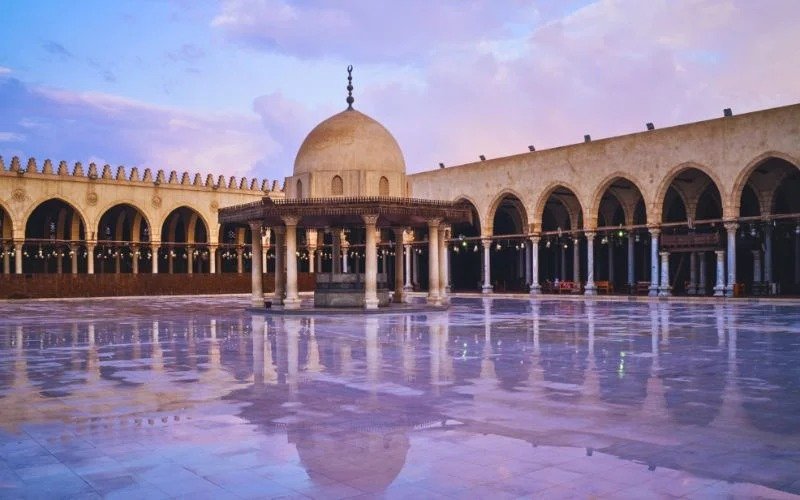
The mosque’s plan features an open rectangular courtyard, surrounded by arcades and minarets. Its prayer hall, once a simple structure, has been expanded to accommodate thousands of worshippers, reflecting the mosque’s continued role as a central religious site. Travelers exploring the mosque amr ibn al as can observe the intricate detailing, geometric patterns, and calligraphy that decorate the walls and arches.
The amr ibn al mosque is particularly famous for its minarets, which have been rebuilt over centuries but retain the historical essence of the original design. The mosque also includes ablution areas, courtyards, and classrooms that reflect its function as both a place of worship and education. Visitors walking through amr bin aas mosque can appreciate how the structure combines practicality with artistry.
Photography enthusiasts enjoy capturing amr ibn al-as mosque photos of its courtyards, arches, and minarets. The interplay of light and shadow throughout the day creates stunning visuals, making it a favorite destination for photographers. For travelers, exploring masjid amr ibn al as offers both spiritual and aesthetic satisfaction, with every corner revealing layers of history and design.
The architectural evolution of the mosque also tells the story of Cairo’s growth. As Fustat expanded and dynasties changed, the mosque adapted, demonstrating resilience and continuity. Understanding the amr ibn al-as mosque cairo history enhances the appreciation of its design, offering travelers a deeper connection to one of Egypt’s oldest and most significant Islamic landmarks.
Visiting Amr Ibn Al-As Mosque: Traveler Tips
Travelers planning a visit to amr ibn al-as mosque egypt should consider several practical tips to maximize their experience. The mosque is an active religious site, so modest dress covering shoulders and knees is required. Comfortable shoes are recommended due to the mosque’s expansive courtyards and stone floors.
Early morning visits are ideal to avoid crowds and capture the best lighting for amr ibn al-as mosque photos. Guided tours, often referred to as sultan mosque tours in other contexts, provide historical and cultural insights, helping visitors understand amr ibn al as mosque’s significance beyond its architectural beauty.
The mosque is situated in historic Fustat, offering opportunities to explore surrounding streets, local markets, and ancient ruins. Travelers visiting amr ibn al-as mosque cairo can combine their visit with other nearby attractions, creating a full day of cultural immersion. Information about fustat mosque and historical landmarks nearby enriches the experience.
Visitors should take time to explore both interior and exterior areas. The main prayer hall, arcades, and courtyard showcase centuries of architectural development. Learning about amr ibn al-as story during the visit adds depth, providing context about the general who established Egypt’s first mosque and his lasting influence on the region.
Photography is a highlight, with the mosque’s arches, minarets, and courtyards offering numerous perspectives. Travelers can also attend prayer sessions respectfully, observing local customs and rituals. Exploring masjid amr ibn al as provides a holistic experience combining history, spirituality, and visual beauty.