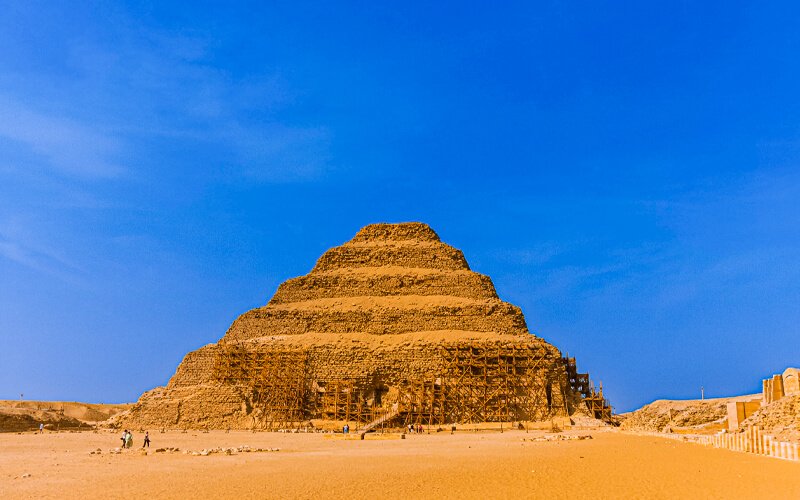
The Step Pyramid of Zoser is one of the most fascinating monuments for travelers exploring ancient Egyptian history. Located in Saqqara, this architectural marvel marks a turning point in human ingenuity as the first monumental stone pyramid in the world. For visitors, standing in front of the pyramid of Zoser is like stepping back in time, imagining the vision of Pharaoh Zoser and his chief architect, Imhotep, who turned a traditional mastaba into the first stepped pyramid.
The pyramid of Zoser is not only a symbol of royal power but also an iconic landmark that continues to attract tourists from around the world. Unlike the smooth pyramids of Giza, the step pyramid consists of six mastaba-like layers stacked on top of each other, creating a unique stepped appearance. This design became a prototype for later Egyptian pyramids, combining religious symbolism with architectural innovation.
Travelers often want to know what is a step pyramid. In simple terms, it is a structure built in stages, each level smaller than the one below, giving it a staircase-like form. The step pyramid of king Djoser (Zoser) was constructed during the 27th century BCE, making it more than 4,600 years old. Visiting the site today, tourists can see not only the exterior layers but also the extensive subterranean chambers and corridors inside the step pyramid, where rituals and burials were once conducted.
The pyramid’s location, often referred to in guides as pyramid of saqqara height and location, is strategically chosen. Standing in front of the Zoser pyramid, travelers notice the surrounding complex, including temples and courtyards designed to honor Pharaoh Zoser. The step pyramid of Zoser is more than just an ancient tomb; it is a complete ceremonial complex offering insight into early Egyptian religion, governance, and architectural skill. For modern travelers, it represents a must-see destination when planning a visit to Egypt.
Whether you are a first-time visitor or returning to explore deeper layers of history, the Zoser step pyramid offers experiences that go beyond photography. It allows tourists to connect with ancient civilization and witness the ingenuity that inspired the iconic pyramids of Giza and beyond.
What Is the Step Pyramid? Understanding Its Significance
Many travelers arrive at Saqqara asking: “what is a step pyramid?” The step pyramid is an architectural innovation that marked a major shift in ancient Egyptian burial practices. Unlike earlier mastabas, which were simple rectangular tombs, the step pyramid of king Djoser introduced verticality and grandeur. Its stacked design provided both symbolic and practical purposes, showcasing the pharaoh’s divine status while creating a monumental structure that would last for millennia.
The step pyramid of Zoser was designed by Imhotep stepped pyramid, who served as chief architect to Pharaoh Zoser. Imhotep’s ingenuity not only transformed stone construction in Egypt but also established him as one of the earliest known architects in history. The stepped design of the Zoser pyramid paved the way for future pyramids, evolving into the smooth-sided pyramids seen later at Giza. Travelers visiting Saqqara today can still see the original contours, understanding how early builders experimented with scale, angles, and symmetry.
The pyramid served more than a burial function. It was a religious and ceremonial center where rituals honoring pharaoh Zoser took place. Inside, a complex network of chambers, corridors, and storage rooms reflects the ancient Egyptians’ intricate beliefs about the afterlife. Visitors exploring inside the step pyramid can experience firsthand the precision and skill required to carve through solid limestone while accommodating burial practices and ceremonial needs.
For travelers, the stepped pyramid of king Djoser is more than an architectural artifact. It is a window into a civilization that combined artistry, science, and spiritual symbolism. Each layer of the pyramid tells a story: from the imposing outer layers designed to awe visitors, to the inner sanctuaries that ensured the pharaoh’s safe journey into eternity. Understanding the pyramid’s purpose enhances every visit, transforming it from a simple photo opportunity into a profound historical experience.
Whether referred to as the Zoser pyramid, the pyramid of Zoser, or simply the step pyramid, this ancient structure continues to inspire awe among travelers seeking both beauty and historical insight.
History of King Zoser and the Step Pyramid
The history of the Step Pyramid of Zoser is deeply intertwined with the reign of King Zoser, also known as Djoser, who ruled during Egypt’s Third Dynasty. Zoser sought to create a monumental tomb that reflected his divine authority, commissioning his chief architect Imhotep to transform the traditional mastaba tomb into a grand stepped pyramid. This bold architectural decision marked a revolution in ancient Egyptian construction and set a precedent for future pyramid-building projects.
Historical records indicate that the pyramid of king Zoser was built around 2670 BCE, making it one of the oldest stone structures in the world. Its creation required meticulous planning, including the selection of limestone blocks, precise alignment with cardinal directions, and the construction of an extensive surrounding complex. The surrounding courtyards, temples, and ceremonial spaces were designed to accommodate rituals, processions, and offerings to ensure Pharaoh Zoser’s successful journey to the afterlife.
Imhotep, whose role as the chief architect is legendary, brought innovative ideas to the project. He expanded the traditional mastaba vertically, creating six stepped layers. This design not only elevated the pharaoh’s tomb but also symbolized a staircase to the heavens, reflecting the ancient Egyptians’ beliefs in immortality. For travelers exploring the stepped pyramid egypt, understanding Imhotep’s contribution adds a fascinating layer to the visit, highlighting human ingenuity over 4,000 years ago.
The step pyramid imhotep is also a reminder of Egypt’s early experimentation with monumental stone construction. Travelers can see evidence of the original limestone blocks and repairs made over centuries to preserve the structure. Visiting the king Zoser pyramid offers a tangible connection to one of the earliest periods of organized state power in Egypt. It allows modern tourists to walk in the footsteps of ancient builders and imagine the scale of effort involved in constructing such a groundbreaking monument.
The pyramid’s historical significance extends beyond architecture. It reflects political power, religious belief, and social organization during Zoser’s reign. By visiting the stepped pyramid of zoser, travelers gain insights into Egypt’s early dynastic period and the cultural values that shaped one of the world’s most remarkable civilizations.
Architecture and Design of the Step Pyramid
The Zoser step pyramid stands as a testament to early architectural genius. Unlike smooth-sided pyramids of later dynasties, the stepped design consists of six mastabas stacked vertically. This design was both symbolic and functional, serving as a visible marker of Pharaoh Zoser’s authority and a practical way to stabilize the structure. For travelers, observing the stepped layers up close is a striking experience, highlighting the precision and vision of its builders.
The pyramid’s exterior is composed of finely cut limestone blocks. Over time, weathering has softened the edges, but the overall structure remains impressive. Visitors can see stepped pyramid of king Djoser in its entirety, noticing the slight tapering at each level. The alignment is precise, with the pyramid facing the cardinal points, reflecting the Egyptians’ advanced knowledge of astronomy and geometry.
Inside the pyramid, the network of chambers, galleries, and passageways is equally impressive. The subterranean rooms were designed to house the king’s sarcophagus, ceremonial items, and offerings. Travelers exploring inside the step pyramid experience the scale and complexity of ancient engineering. The corridors are lined with vertical shafts for ventilation, ensuring the preservation of the burial chamber and illustrating early problem-solving techniques in construction.
One remarkable feature is the integration of the surrounding complex. The pyramid is surrounded by courtyards, temples, and ceremonial buildings, collectively forming a unified architectural composition. The layout reflects the Egyptians’ understanding of space, movement, and ritual. Travelers interested in pyramid of saqqara height and location will appreciate how the pyramid’s positioning allowed visibility from miles away, symbolizing the pharaoh’s enduring presence.
The design also emphasizes symbolism. The stepped layers represent a stairway to the heavens, linking the king’s earthly reign with divine eternity. Each level is proportioned to create an impression of height and grandeur. Observing the step pyramid of king Zoser in person, tourists can feel the monumental impact of this design, understanding why it inspired generations of pyramid builders across Egypt.
Visiting the Step Pyramid of Zoser: Traveler Tips
For travelers planning a visit to the Step Pyramid of Zoser, preparation ensures a more rewarding experience. The pyramid is located at Saqqara, roughly 30 km south of Cairo, making it accessible as a day trip. Many visitors combine the pyramid with other nearby attractions, such as the tombs of nobles or the Imhotep Museum, providing a richer understanding of ancient Egyptian life.
Timing is crucial. Early morning visits are ideal to avoid crowds and heat, while late afternoons provide soft lighting perfect for photography. Visitors interested in great step pyramid photos should bring a wide-angle lens to capture the full stepped structure along with the surrounding complex. Comfortable shoes, water, and sun protection are essential, as the site involves extensive walking on uneven terrain.
Guided tours of the step pyramid of king Djoser are highly recommended. Experienced guides provide historical context, explain architectural details, and share legends associated with Pharaoh Zoser. Some tours include exclusive access to areas inside the step pyramid, offering a unique perspective not available to casual visitors. Travelers often report that guided insights transform a standard visit into an immersive historical experience.
For independent travelers, maps and informational panels around the site provide helpful guidance. It’s advisable to explore both the pyramid itself and the surrounding stepped pyramid of zoser complex to understand its full scale and significance. Observing the causeways, temples, and secondary structures adds layers of appreciation to the visit.
Photography enthusiasts should consider multiple perspectives: front-facing shots highlight the pyramid’s stepped design, while side angles showcase its layers and relation to the surrounding desert. Sunset visits are especially beautiful, casting long shadows that accentuate the structure’s depth and contours.
Visiting the Zoser pyramid is not only a visual delight but also an educational journey. By combining careful planning, guided insights, and mindful exploration, travelers leave with a profound understanding of one of Egypt’s most historic and architecturally significant monuments.
Inside the Step Pyramid: Exploring the Subterranean Chambers
One of the most intriguing aspects of the step pyramid of Zoser is its subterranean design. Beneath the stepped layers lies a complex network of tunnels, chambers, and burial rooms, built to house Pharaoh Zoser and his funerary goods. Travelers exploring inside the step pyramid are often amazed by the architectural sophistication required to carve such intricate spaces from solid limestone.
The underground chambers were intended for ceremonial use, storing items for the afterlife and conducting rituals. These rooms reflect the Egyptians’ belief in immortality and the pharaoh’s divine role. Ventilation shafts, well-planned corridors, and hidden chambers demonstrate advanced engineering knowledge. For tourists, walking through these spaces provides a sense of the effort and planning involved in creating a monument meant to last for millennia.
One notable feature is the king’s burial chamber, located deep within the pyramid. Though looted in antiquity, it illustrates the Egyptians’ meticulous approach to safeguarding the pharaoh’s remains. Visitors can also see storage rooms where offerings were once kept, offering insights into religious practices. Understanding these spaces enhances appreciation for the stepped pyramid of king Djoser as both a tomb and a ceremonial hub.
The underground design also contributed to the structural stability of the pyramid. By carving tunnels within the bedrock, ancient builders reduced pressure on the upper levels, ensuring durability. Travelers exploring zoser step pyramid tunnels often marvel at the precision of these chambers and the ingenuity of early Egyptian architects like Imhotep.
For modern visitors, experiencing the interiors creates a connection with history that extends beyond visual observation. Walking through inside the step pyramid allows travelers to imagine ancient priests performing rituals, craftsmen carving stone, and Pharaoh Zoser resting in eternal peace. This immersive experience is a highlight for many seeking deeper engagement with Egypt’s ancient past.
Step Pyramid of Zoser Facts: Key Insights for Travelers
Travelers often ask about the most important step pyramid of Zoser facts to know before visiting. First, it is the world’s oldest stone pyramid, built during Egypt’s Third Dynasty by Pharaoh Zoser. Its innovative design marked the shift from traditional mastabas to monumental pyramids, influencing future structures like the Great Pyramid of Giza.
The pyramid is approximately 62 meters tall, with six stepped layers creating its signature appearance. Its pyramid of saqqara height and location makes it visible from surrounding areas, emphasizing the pharaoh’s dominance. The complex also includes temples, courtyards, and ceremonial buildings, reflecting its multifunctional purpose as a tomb, religious site, and architectural statement.
Another interesting fact is the role of Imhotep stepped pyramid in its design. Imhotep is credited with combining artistic vision and engineering expertise, pioneering techniques still admired by architects today. His work on the stepped pyramid egypt demonstrates early use of large stone blocks, alignment with cardinal points, and sophisticated planning to ensure stability.
The pyramid’s interior is equally remarkable. It contains chambers, corridors, and shafts designed for burials, offerings, and ritual use. Travelers exploring inside the step pyramid gain a sense of the meticulous planning that went into both construction and religious symbolism. These chambers reflect the Egyptians’ beliefs about the afterlife and the pharaoh’s divine role.
Other facts include the pyramid’s orientation, symbolic significance, and role in Egyptian history. The pyramid of Zoser represents innovation, power, and spirituality, making it an essential stop for tourists seeking a comprehensive understanding of ancient Egypt