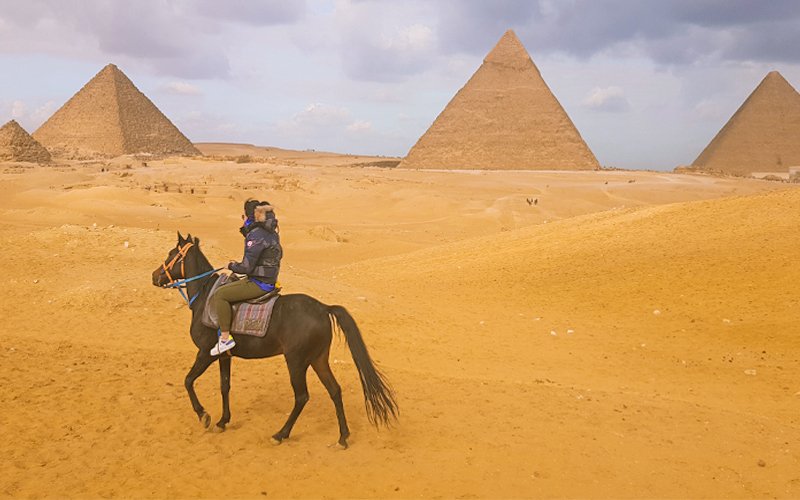
The Giza Pyramids Complex remains one of the most iconic archaeological destinations in the world, attracting travelers who want to stand before the ancient engineering wonders that shaped human history. Whether someone is looking to understand the tinggi piramida giza, planning a tour through the kompleks piramida giza, or simply curious about what is the most famous pyramid in Egypt, the Giza Plateau delivers an unforgettable experience. For anyone visiting Egypt, the Giza pyramids complex blends incredible monuments, desert landscapes, and cultural depth, making it a must-see stop for every traveler.
Understanding the Giza Pyramids Complex
The Giza complex—often referred to as the pyramids of giza complex—is a large archaeological area that includes three major pyramids, smaller queen pyramids, ancient tombs, temples, causeways, and the world-famous Great Sphinx. Many travelers initially imagine only a few iconic structures rising from the desert, but the full landscape reveals a sprawling pyramid city Egypt created more than 4,500 years ago. This broader understanding helps visitors appreciate how the great pyramid complex was not simply a burial area but a ceremonial and administrative heart shaped by the powerful pharaohs of the Old Kingdom.
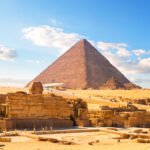
At the core of the site stand the three pyramids of Giza, also known as the Pyramids of Khufu, Khafre (Khefren), and Menkaure. They are often referred to collectively as the great pyramids of Giza because they represent the architectural achievements of the Fourth Dynasty. Many travelers searching for what are the three pyramids of Giza are surprised to learn how different they are in size, structure, and purpose. For example, Khufu’s Pyramid—piramida terbesar di Giza—dominates the plateau with its grand scale, while the other two add balance and harmony to the ancient landscape.
Visitors exploring the Giza pyramid complex will find more than monumental structures; the site also includes workers’ villages, boat pits, mortuary temples, and burial shafts. These elements reveal that the pyramids were part of a complete and sophisticated funerary system, not standalone monuments. When exploring the complejo de Guiza, travelers can see how each structure played a role in guiding the pharaoh’s journey to the afterlife, according to ancient Egyptian beliefs.
The Giza Plateau is also home to several entrances, viewing points, and pathways that offer unique perspectives. Travelers often want to know where is the Pyramid of Giza located in relation to modern Cairo. The answer surprises many: the site sits just on the edge of the city, blending ancient terrain with the expanding urban landscape. This proximity makes the Giza pyramids accessible yet still majestic, offering the rare experience of stepping directly from modern life into a world of ancient engineering mastery.
A Deep Look at the Great Pyramid of Khufu
Among all the wonders on the plateau, the Pyramid of Khufu stands out as the biggest pyramid in Egypt and the most famous landmark on the Giza Plateau. Known as the Great Pyramid of Giza, this grand monument has fascinated historians, travelers, and explorers for centuries. It remains the answer to anyone asking what is the most famous pyramid in Egypt, since its size, precision, and history are unmatched. This structure is also referred to by many names such as the great of Giza, the Great Pyramid, or within academia, as part of the Giza pyramid complex.
Travelers researching the tinggi piramida giza often discover that the pyramid originally stood at 146.6 meters (481 feet). Although erosion and the loss of its outer casing stones have reduced its height to about 138 meters, Khufu’s Pyramid remains the biggest pyramid in Egypt and one of the most awe-inspiring structures ever built. Its massive limestone blocks, some weighing more than 70 tons, were cut with astonishing precision and transported over long distances—an engineering achievement still studied today.
This pyramid is also central to the piramida terbesar di kompleks piramida giza, representing the peak of royal power during the Fourth Dynasty. Inside, travelers will find the Ascending Passage, the Grand Gallery, and the King’s Chamber. These internal design elements reveal advanced knowledge of mathematics, astronomy, and stone-cutting techniques. Many visitors leave astonished at how such a monumental structure was constructed without modern machinery.
Around the Great Pyramid also lie several impressive features worth exploring. The Solar Boat Museum, which houses the reconstructed Khufu ship, is one of the most fascinating attractions near the pyramid’s southern side. This ancient boat was buried to serve the pharaoh during his journey in the afterlife. Travelers also encounter several smaller pyramids belonging to the queens of Khufu, each contributing to the broader pyramid complex that supported the main structure.
From a traveler’s perspective, visiting the Great Pyramid offers an unforgettable moment of connection with human history. Standing before the biggest pyramid in Egypt enhances the sense of wonder that has drawn explorers here for thousands of years. Whether viewed at sunrise, sunset, or from the nearby desert hills, Khufu’s Pyramid represents the timeless spirit of ancient Egypt’s architectural brilliance.
Exploring the Pyramids of Khafre and Menkaure
While Khufu’s Pyramid is the largest, the Pyramids of Khafre and Menkaure add balance, harmony, and historical richness to the pyramid complex. Many travelers looking for three pyramids of Giza names learn that the second largest pyramid belongs to Pharoah Khafre, known for its preserved casing stones near the top, giving it a unique silver-white cap. This detail makes the Khafre Pyramid instantly recognizable, especially when the sunlight hits the remaining limestone casing, reflecting a view of how the original pyramid city once looked.
Khafre’s Pyramid sits on slightly higher ground than Khufu’s, creating an illusion that it may be taller. However, travelers researching the tinggi piramida giza will discover that Khafre’s Pyramid stands at about 136 meters—slightly shorter than the Great Pyramid but still astonishing in its scale. Its complex also includes one of the best-preserved mortuary temples on the plateau, showcasing original stone floors and massive granite blocks.
Khafre’s Pyramid is famously connected to the Great Sphinx, which stands guard at the entrance of the Giza Plateau. Travelers visiting the kompleks piramida giza often find this area particularly captivating due to the impressive architecture and the spiritual symbolism linking the pharaoh with the lion-bodied guardian. This connection adds depth to the story of the pyramids of giza complex, demonstrating how art, engineering, and beliefs merged in ancient Egyptian culture.
The third and smallest of the three pyramids of Giza is the Pyramid of Menkaure. Although modest in size compared to its neighbors, it has its own distinct charm. Travelers exploring the pyramid city Egypt often appreciate Menkaure’s layered casing stones, crafted from granite rather than limestone, giving it a rich texture and color. This pyramid stands approximately 65 meters tall and represents a shift in architectural style and royal ideology.
Despite being the smallest among the three pyramids of Giza, Menkaure’s complex holds significant archaeological importance. It includes three queen pyramids, chapels, and a valley temple. Many visitors find the Menkaure area quieter than the crowded zones around the other pyramids, making it ideal for photography and peaceful exploration.
Together, Khafre and Menkaure contribute depth and diversity to the Giza complex, helping travelers understand the evolution of pyramid construction and royal funerary traditions.
The Great Sphinx and Surrounding Monuments
No journey through the pyramids of giza complex is complete without standing in front of the Great Sphinx, one of the most celebrated statues in ancient history. Many travelers visiting the Giza pyramids complex feel a deep connection when walking toward this massive limestone guardian. With the body of a lion and the face often believed to represent Pharaoh Khafre, the Sphinx captures the imagination through its scale, artistry, and mysterious origins.
The Great Sphinx stands near the Valley Temple of Khafre, forming a key part of the great pyramid complex. This temple is built from massive limestone blocks and offers insight into how the ancient Egyptians performed rituals, mummification ceremonies, and offerings. Walking through these spaces helps travelers understand the complex religious systems that shaped ancient Egyptian culture.
The Sphinx’s architectural style and symbolism reflect the fusion of human intelligence and animal strength, serving as a protective force for the plateau. Many visitors come with questions such as where is the Pyramid of Giza in relation to the Sphinx. The answer becomes clear once standing on the plateau: the Sphinx sits at the gateway to the Giza Plateau, facing the rising sun, symbolizing rebirth and protection.
Surrounding the Sphinx are several remarkable architectural elements. These include the Sphinx Enclosure—a deep trench carved out of the bedrock—and various restoration layers showing how ancient Egyptians and later civilizations attempted to preserve this massive sculpture. Observing the Sphinx from different angles allows travelers to appreciate the craftsmanship and the long history of conservation efforts.
Another important area is the causeways connecting the pyramids to their respective valley temples. These long, paved passageways served both religious and logistical purposes. Travelers walking along these paths often imagine how ancient priests escorted the pharaoh’s body during burial ceremonies. Such elements highlight the complexity of the Giza pyramid complex and reinforce why it remains one of the world’s most detailed archaeological landscapes.
The area surrounding the Sphinx also offers several panoramic viewpoints where travelers can capture memorable photos of the three pyramids of Giza rising behind the limestone guardian. This blend of monumental art and natural desert terrain creates a setting that remains unmatched anywhere else in the world.
Height, Structure, and Engineering of the Pyramids
Many travelers arrive at the Giza Plateau eager to understand the astonishing engineering secrets behind the pyramids. When researching the tinggi piramida giza or the structure of the piramida terbesar di kompleks piramida giza, one finds an incredible blend of science, mathematics, and human determination. The ancient Egyptians achieved remarkable precision, aligning the pyramids with astronomical directions and designing internal chambers that remain accessible thousands of years later.
Khufu’s Great Pyramid originally stood at 146.6 meters, Khafre’s at 136 meters, and Menkaure’s at 65 meters. These heights contribute to the ongoing fascination with the giza complex, showing how each pharaoh pushed architectural limits. The pyramid shapes, consisting of millions of stone blocks, were carefully placed to ensure stability. Travelers often wonder how these massive stones were lifted, with theories ranging from ramps to counterweight systems.
The pyramid complex also features remarkable interior structures. In Khufu’s Pyramid, the Grand Gallery extends upward with astonishing precision, using corbelled ceilings to distribute pressure. The King’s Chamber is constructed from large granite blocks sourced from Aswan, located hundreds of kilometers south of Cairo. Such details remind visitors of the logistical brilliance behind the Giza pyramids complex.
Khafre’s Pyramid offers a simpler yet equally impressive internal structure. Its descending passage leads into chambers carved directly into the bedrock, demonstrating how ancient engineers adapted designs to available materials and terrain. Menkaure’s Pyramid, while smaller, showcases advanced craftsmanship with its granite casing stones, which required expert carving techniques.
The layout of the pyramids of Giza complex displays deliberate alignment with the stars, particularly the Orion constellation, which was associated with Osiris, the god of the afterlife. These alignments reveal the religious motivations behind the structures and highlight the advanced astronomical knowledge of ancient Egyptian builders.
Travelers exploring these engineering details often gain a deeper appreciation of the great pyramid definition—more than a tomb, a monumental expression of cosmic and royal power. Observing the geometry, alignment, and careful planning of each structure helps visitors understand why the Giza pyramid complex remains one of the world’s greatest architectural achievements.
History and Cultural Significance of the Giza Plateau
The history of the Giza pyramids spans more than 4,500 years, dating back to the Fourth Dynasty of ancient Egypt. The site was chosen carefully due to its stable bedrock, access to the Nile, and alignment with sacred geography. Travelers exploring the kompleks piramida giza often find themselves drawn to the cultural depth that surrounds each monument, extending far beyond their physical size.
The three pyramids of Giza served as monumental tombs for the pharaohs Khufu, Khafre, and Menkaure. Their construction reflects the political, religious, and economic strength of the Old Kingdom. The pyramids formed the ceremonial center of a vast necropolis, which included mastabas for nobles, villages for workers, and temples for religious rituals.
Understanding what are the three pyramids of Giza and their purpose provides travelers with a deeper connection to ancient Egyptian worldviews. The pyramids represented the stairways to heaven, where the pharaoh, considered a divine figure, would ascend to join the gods. Many travelers are captivated by the fact that the ancient Egyptians designed these structures not simply as tombs but as cosmic gateways.
The surrounding landscape of the pyramids of giza complex also reveals the everyday lives of workers who contributed to these monumental projects. Archaeological discoveries show evidence of organized labor, medical care, bakeries, breweries, and tools used in construction. This challenges the myth that the pyramids were built by enslaved people and instead highlights the presence of a skilled and respected workforce.
Culturally, the Giza Plateau remained significant long after the Old Kingdom. Subsequent civilizations—from the New Kingdom to Greek and Roman periods—visited and restored the site. Many inscriptions and stelas found here reflect centuries of reverence. Even today, travelers experience a sense of continuity when standing among these ancient stones.
For modern visitors, the Giza pyramid complex represents a shared human legacy. Whether one is exploring the complejo de Guiza or learning about the great of Giza, the site symbolizes human creativity, spiritual belief, and architectural mastery. This deep historical context enhances the traveler’s experience, making each step on the plateau feel like a journey through time.
Experiencing the Giza Pyramids Today: Travel Tips and What to Expect
Planning a visit to the Giza Pyramids Complex requires thoughtful preparation to ensure a comfortable and enriching experience. Travelers often begin by asking where is the Pyramid of Giza, and the answer is pleasantly convenient—the plateau sits just a short drive from downtown Cairo. This makes it possible for travelers to combine a full exploration of the giza complex with other iconic sites like the Egyptian Museum or the Grand Egyptian Museum.
When visiting, it’s best to arrive early in the morning or late in the afternoon to avoid the midday heat and crowds. These times also offer the best lighting for photography, especially if you want to capture the three pyramids of Giza from panoramic viewpoints. Hiring a knowledgeable local guide can also elevate your experience, helping you understand the historical layers behind each structure in the kompleks piramida giza.
Visitors should prepare for a mix of walking, climbing, and exploring desert terrain. Comfortable shoes, sun protection, and plenty of water are essential. Some travelers choose to enter the Great Pyramid, which offers a unique and thrilling experience as you navigate narrow passages and steep inclines. While not suited for everyone, this interior tour gives a remarkable insight into the engineering wonders behind the piramida terbesar di Giza.
Camel and horse rides are available around the plateau, offering stunning views of the great pyramids of Giza from desert areas far from the crowds. Travelers often enjoy capturing breathtaking photos of the pyramid complex against the backdrop of the golden sands, creating memorable travel moments that reflect Egypt’s timeless beauty.
Another highlight is the evening Sound and Light Show, which narrates the history of the Giza pyramid complex through lights projected onto the pyramids and Sphinx. This experience appeals to travelers seeking cultural immersion and a unique way to appreciate the monuments after sunset.
Dining options are available near the plateau, with several restaurants offering rooftop views directly facing the pyramids of giza complex. Savoring traditional Egyptian cuisine while gazing at these ancient wonders creates an unforgettable atmosphere for visitors.
Whether exploring the pyramid city Egypt, learning about three pyramids of Giza names, or simply standing before the great of Giza, travelers leave the plateau with a sense of wonder and fulfillment. A visit to the Giza pyramids remains one of the world’s most inspiring travel experiences, blending history, culture, and adventure in a single unforgettable journey.