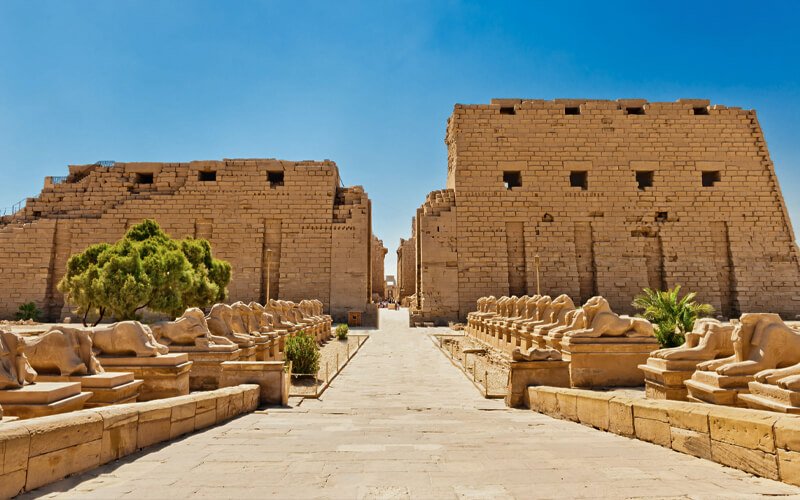
Karnak Temple Egypt is one of the most extraordinary and iconic monuments in Luxor, attracting travelers from all over the world. This vast complex, often referred to as the temple of Karnak, is a testimony to the religious devotion and architectural mastery of ancient Egypt. Visitors exploring Karnak Egypt are immediately struck by the sheer scale of the site, with towering columns, intricate hieroglyphics, and monumental statues that showcase the grandeur of the pharaohs who contributed to its construction.
The Karnak temple in Egypt is not a single building but a sprawling complex of temples, chapels, pylons, and obelisks spanning over 200 acres. Its strategic location on the east bank of the Nile, near Luxor city, makes it a must-visit for travelers planning trips to the region. Exploring temple of Karnak Egypt offers insights into the religious, cultural, and political significance of ancient Thebes, making it a highlight for history enthusiasts and casual tourists alike.
History of Karnak Temple
The temple of Karnak has a history that spans more than 2,000 years, with contributions from over 30 pharaohs, from Senusret I to Ramses XI. Known for its association with the god Amun-Ra, the complex grew into one of the largest religious sites in the world. The Egypt Karnak Temple represents centuries of religious, architectural, and political evolution, reflecting the ambitions of Egypt’s most powerful rulers.
Many pharaohs, including Thutmose III, Hatshepsut, and Ramses II, left their mark on Karnak temples, adding pylons, obelisks, statues, and sanctuaries. The temple of Karnak Egypt served as a religious hub where rituals, festivals, and ceremonies were conducted to honor the gods and legitimize the pharaoh’s divine rule. Historical records and inscriptions found throughout the complex provide a detailed account of ancient Egyptian civilization.
Architecture and Layout
The Karnak temple location is famous for its massive hypostyle hall, featuring 134 colossal columns arranged in 16 rows. The central columns, towering over 21 meters, create an awe-inspiring experience for visitors. The temple of Karnak facts reveal that these columns were adorned with intricate hieroglyphics and reliefs depicting battles, religious rituals, and royal decrees.
The complex includes the Precinct of Amun-Ra, the Precinct of Mut, and the Precinct of Montu. Each precinct is dedicated to different deities, showcasing the diversity of Egyptian religious practices. Travelers exploring temple Karnak can walk through grand courtyards, sacred lakes, and monumental pylons, fully immersing themselves in the grandeur of ancient Thebes.
Religious Significance
The temple of Karnak was primarily dedicated to Amun-Ra, the sun god, and played a central role in Egyptian religious life. It hosted the famous Opet Festival, where statues of gods were paraded from Karnak to Luxor Temple, reaffirming the divine connection of the pharaohs.
Religious rituals performed at Karnak temples included offerings, prayers, and ceremonies meant to sustain the gods and ensure prosperity for Egypt. The site also housed sacred lakes used for ritual purification, emphasizing the spiritual and practical aspects of Egyptian religious practices. Travelers gain a deep understanding of ancient beliefs by exploring the temple of Karnak location.
Major Attractions within the Complex
Karnak Egypt is home to numerous highlights that captivate visitors. The Great Hypostyle Hall, obelisks of Hatshepsut, colossal statues of Ramses II, and the sacred lake are among the most visited areas. The temple of Karnak facts emphasize the artistic and engineering skills required to construct these massive structures.
For those planning Karnak tours, taking a guided route helps in understanding the historical context, architectural details, and religious significance of each section. Karnak photos capture the grandeur of the columns, statues, and reliefs, making for an unforgettable visual memory.
Fun Facts About Karnak Temple
-
The complex covers over 200 acres, making it one of the largest religious sites ever built.
-
Construction spanned over 2,000 years with contributions from more than 30 pharaohs.
-
The Great Hypostyle Hall features 134 columns, some decorated with hieroglyphics depicting pharaohs’ achievements.
-
The sacred lake was used for ritual purification.
-
Obelisks of Hatshepsut and Ramses II stand as monuments to royal authority.
These Karnak facts make the temple not only a historical marvel but also an educational experience for travelers.
Visiting Karnak Temple
Travelers visiting Karnak temple in Egypt should allocate at least 3-4 hours to explore the site thoroughly. The complex is easily accessible from Luxor city, and many tours combine visits to Luxor Temple and other nearby archaeological sites.
For those traveling from Cairo, Cairo Luxor flights or a Cairo to Luxor flight provide convenient access. The Cairo to Luxor distance is around 500 miles, making flying the fastest option. Visitors from Hurghada can also plan a Hurghada to Luxor trip, approximately 280 miles by road, which allows combining Karnak excursions with Nile sightseeing.
Photography and Exploration Tips
Karnak photos are a highlight for visitors, but lighting conditions vary throughout the day. Early morning or late afternoon visits provide the best lighting for capturing the grandeur of columns and statues.
Travelers exploring Karnak Egypt should wear comfortable shoes, bring water, and allow time to wander the vast courtyards and halls. Guided tours enhance understanding of the temple of Karnak facts and provide historical context that makes the visit more meaningful.
How to Get to Karnak Temple
The temple of Karnak location is on the east bank of the Nile, near Luxor city center. Travelers can reach the temple by taxi, private car, or as part of organized Karnak tours. For visitors from Cairo, booking Cairo Luxor flights or arranging a road trip helps in combining Karnak excursions with other Luxor attractions.
Understanding where is the Karnak temple or where is Karnak Egypt located helps travelers plan efficiently, ensuring they have sufficient time to explore without feeling rushed.
Combining Karnak Temple with Other Sites
Visiting Karnak temples can be paired with nearby attractions such as Luxor Temple, the Valley of the Kings, and the Colossi of Memnon. Many travelers plan day trips Luxor from Hurghada or combine their Luxor Egypt visit with a Nile cruise.
The temple’s location allows seamless integration into a multi-site itinerary, making Karnak tours a central part of exploring ancient Thebes. Knowledge of temple of Karnak Egypt enhances the experience, providing context for architectural features, religious significance, and pharaonic history.
Planning Your Visit – Practical Advice
To make the most of visiting Karnak Temple Egypt:
-
Allocate 3–4 hours for a thorough visit.
-
Combine your trip with nearby Luxor attractions.
-
Consider guided tours for historical and cultural context.
-
Use Cairo to Luxor flight or plan travel from Hurghada using Hurghada to Luxor distance.
-
Bring water, wear comfortable shoes, and allow time for photography.
The temple of Karnak offers travelers an unforgettable journey through ancient Egyptian history, architecture, and religion, making it one of the most remarkable sites in Luxor.