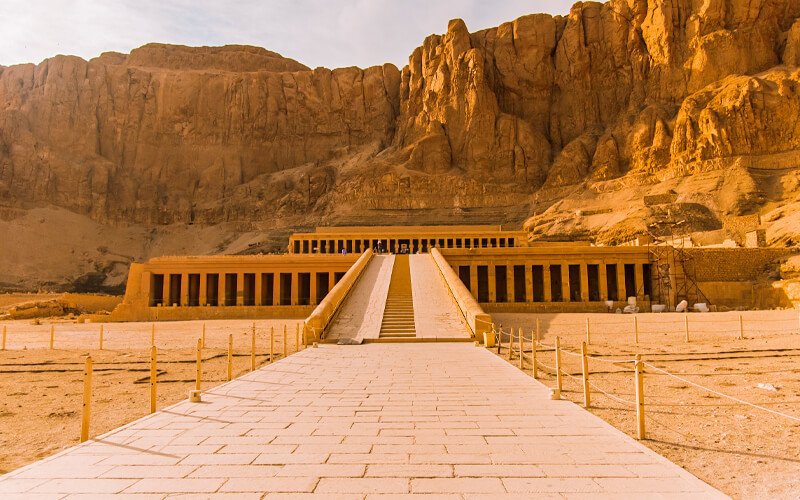
Hatshepsut Temple stands as one of the most remarkable architectural achievements of ancient Egypt, reflecting the grandeur of Queen Hatshepsut’s reign. Located on the west bank of the Nile near Luxor, this mortuary temple is renowned for its innovative design, elegant terraces, and historical significance. Travelers visiting hatshepsut temple egypt are often captivated by its harmonious integration into the cliffs of Deir el-Bahari, creating an awe-inspiring blend of nature and human ingenuity.
Unlike other temples, the temple of hatshepsut was designed to honor the queen herself and her divine connection, rather than just the gods. Its terraces, ramps, and colonnades provide a stunning visual journey, while inscriptions and statues tell the story of Hatshepsut’s rise to power, her trading expeditions, and her lasting legacy.
Visiting hatshepsut temple location today offers travelers not only an architectural marvel but also a deep dive into the history of one of Egypt’s most fascinating rulers. The temple continues to draw historians, photographers, and tourists alike, offering a unique perspective on ancient Egyptian religious practices, royal life, and monumental construction.
History and Construction of the Mortuary Temple of Hatshepsut
The mortuary temple of hatshepsut was commissioned during the 18th Dynasty around 1479 BCE. Queen Hatshepsut, one of Egypt’s few female pharaohs, aimed to legitimize her rule through monumental architecture. The temple’s location at Deir el-Bahari was chosen for its sacred association with Pharaoh Mentuhotep II, symbolically linking Hatshepsut to past rulers.
The temple is renowned for its terraces, which rise in three levels connected by long ramps. The hatshepsut mortuary temple showcases the advanced engineering skills of the time, with colonnades, reliefs, and statues carved directly into the limestone cliffs. Each terrace was dedicated to different aspects of the queen’s reign, from her divine birth to her successful trading expeditions, particularly the famous expedition to Punt.
Hatshepsut’s architects integrated the structure with the natural landscape, blending architecture and geology seamlessly. This unique approach makes temple hatshepsut one of the most visually stunning temples in Egypt. The temple also served as a place for rituals, ceremonies, and offerings, maintaining Hatshepsut’s memory long after her death.
Architecture and Design of Hatshepsut Temple
The mortuary temple of hatshepsut architecture is a masterpiece of Egyptian design. Its terraces feature colonnades lined with statues of the queen, sphinxes, and depictions of gods. The long ramps connecting the terraces create a majestic sense of ascent, symbolizing Hatshepsut’s journey to the divine.
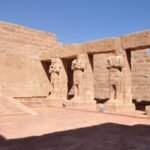
The temple’s central axis leads visitors from the entrance courtyard to the sanctuary dedicated to Amun-Ra. Along the way, walls are covered with reliefs and inscriptions illustrating the queen’s divine birth, coronation, and her peaceful expeditions to Punt. These detailed carvings are essential for understanding Hatshepsut’s political and religious strategies.
The temple of queen hatshepsut is also notable for its innovative use of light and space. The terraces are open to the sun, creating dynamic shadows that change throughout the day. This careful interplay between sunlight and structure adds to the temple’s ethereal atmosphere.
Religious and Cultural Significance
Hatshepsut’s temple was not only a mortuary site but also a center of worship. The hatshepsut’s temple honored the god Amun-Ra and celebrated the queen’s divine legitimacy. Reliefs depict Hatshepsut making offerings, reinforcing her role as both ruler and religious intermediary.
The temple reflects the integration of religion and governance in ancient Egypt. The temple of hatshepsut egypt demonstrates how architecture and iconography were used to convey political power. Hatshepsut’s divine birth narratives, shown throughout the temple, helped legitimize her rule in a male-dominated society.
The Tomb of Hatshepsut and Funerary Practices
Though the hatshepsut tomb itself is separate from the temple, the mortuary complex played a crucial role in the queen’s burial rituals. The temple acted as a site for offerings, prayers, and ceremonies to ensure her passage into the afterlife. Many mortuary temple of queen hatshepsut inscriptions illustrate funerary practices, including depictions of gods, sacred animals, and offerings.
The tomb of hatshepsut remains a significant archaeological site, providing insights into the 18th Dynasty’s burial customs and beliefs about the afterlife. Scholars continue to study the temple and tomb to uncover Hatshepsut’s legacy and the intricacies of her reign.
Art and Reliefs at Hatshepsut Temple
The hatshepsut temple facts include its extraordinary reliefs, which are among the finest examples of Egyptian art. Scenes depict Hatshepsut’s divine birth, trading expeditions to Punt, and her offerings to the gods. These images served both religious and political purposes, emphasizing her divine right to rule.
The mortuary temple of hatshepsut photos show vibrant colors, detailed carvings, and sophisticated compositions. Statues of Hatshepsut in male pharaonic attire, as well as feminine representations, illustrate the complex interplay of gender and authority in her reign.
Visiting Hatshepsut Temple Today
Travelers interested in history and architecture will find hatshepsut temple location accessible on the west bank of Luxor. Guided tours often combine visits to the temple with the Colossi of Memnon and the Valley of the Kings, providing a full day of cultural exploration.
Visitors can explore terraces, ramps, and colonnades, while knowledgeable guides explain the temple hatshepsut history and significance of each relief and statue. The site is well-preserved and allows for incredible photography opportunities.
Hatshepsut Temple Facts Every Traveler Should Know
-
Built during the 18th Dynasty by Queen Hatshepsut.
-
Located at Deir el-Bahari on Luxor’s west bank.
-
Designed to honor Hatshepsut and Amun-Ra.
-
Features three terraces connected by long ramps.
-
Contains reliefs depicting Hatshepsut’s divine birth and Punt expedition.
-
Integrated into the cliffs for natural harmony.
These hatshepsut temple facts enhance any visit, giving travelers a deeper understanding of its architectural and historical significance.
Architecture vs. Other Temples in Luxor
The temple of hatshepsut egypt stands out compared to other Luxor temples due to its terrace design and integration into cliffs. Unlike the hypostyle halls of Karnak, Hatshepsut’s temple emphasizes horizontality and scenic alignment with the Nile. Its sophisticated blend of natural and built environments highlights the queen’s vision and the ingenuity of ancient Egyptian architects.
Preservation and Archaeological Work
Modern efforts to preserve hatshepsut temples have focused on stabilizing terraces, conserving reliefs, and preventing erosion. Archaeologists continue to uncover artifacts and inscriptions that shed light on Hatshepsut’s reign and her mortuary practices. Preservation ensures that future travelers can experience the temple of queen hatshepsut much as it appeared thousands of years ago.
Planning Your Visit to Hatshepsut Temple
When visiting the temple of hatshepsut, plan to spend at least two to three hours exploring the terraces and photographing the site. Combine the visit with other west bank attractions like the Valley of the Kings and Colossi of Memnon for a comprehensive Luxor experience. Wear comfortable shoes, bring water, and consider a guided tour for richer context.
Whether you are an archaeology enthusiast, history lover, or casual traveler, visiting hatshepsut temple egypt offers an unforgettable journey into ancient Egypt’s royal heritage.