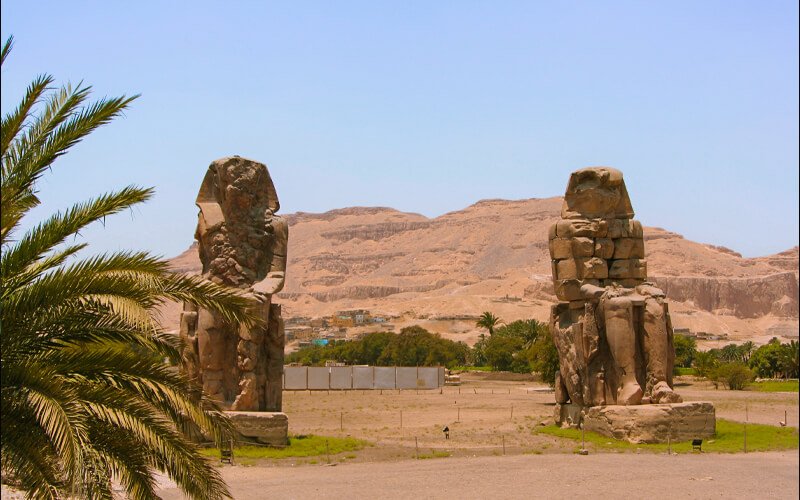
The Origins and History of the Colossi of Memnon
Long before they became a must-see attraction for travelers to Luxor, the Colossi of Memnon were designed as part of a grand mortuary temple dedicated to Pharaoh Amenhotep III. Built around 1350 BCE, these massive statues originally flanked the entrance to the largest temple complex ever constructed on the west bank of the Nile. Measuring about 18 meters (nearly 60 feet) in height and weighing approximately 720 tons each, the statues were carved from single blocks of quartzite sandstone transported from quarries near Cairo — over 675 kilometers away.
This monumental effort illustrates the incredible engineering skills of ancient Egyptian builders. The temple itself, now mostly destroyed by floods and earthquakes, once rivaled the size of Karnak and Luxor Temples. Yet, despite the loss of the temple, the Colossi remained standing, earning their fame throughout ancient times as the “Vocal Memnon” — a name derived from the strange sound one of the statues emitted at dawn after an earthquake in 27 BCE. Greek travelers believed the sound was the voice of the Trojan hero Memnon greeting his mother, Eos, the goddess of dawn.
The Colossi of Memnon Egypt became so legendary that they were included in countless ancient writings and travel accounts, making them one of the earliest known tourist attractions in human history. Kings, poets, and philosophers — from Emperor Hadrian to Strabo — came to hear the statue’s mystical “song.”
Architectural Details and Construction Techniques
When studying the Colossi of Memnon Luxor, one can’t help but admire the technical genius behind their creation. Each statue represents Pharaoh Amenhotep III seated on his throne, hands resting on knees, gazing east toward the Nile River and the rising sun — a symbolic gesture connecting the pharaoh to divine rebirth. On the base of each statue, intricate carvings depict scenes of the Nile gods, uniting Upper and Lower Egypt, while smaller statues of the pharaoh’s wife Tiye and his mother Mutemwiya appear beside his legs.
The Colossi of Memnon Luxor Egypt are sculpted from quartzite sandstone blocks transported from the quarries at Gebel el-Silsila and possibly even Helwan. Moving such immense stones over hundreds of kilometers without modern machinery remains one of the great marvels of ancient engineering. It’s believed that the statues were assembled using ramps, wooden sledges, and an enormous labor force.
Time and nature have taken their toll — earthquakes, erosion, and floods have fractured the statues over millennia. Yet, their restoration and preservation efforts ensure that visitors can still stand in awe of their scale and artistry. Even today, standing beneath them, travelers feel an overwhelming sense of connection to ancient Egypt’s glory.
The Legend of the “Talking Colossi of Memnon”
One of the most fascinating aspects of the Colossi of Memnon facts is the mysterious “singing” phenomenon that once made these statues famous worldwide. After the earthquake of 27 BCE, the northern statue developed cracks that caused it to produce a haunting sound at sunrise. Ancient Greeks and Romans interpreted it as the voice of Memnon, the Ethiopian king who fought in the Trojan War. They believed the statue spoke to greet the dawn or lament his fate.
This “talking Colossi of Memnon” became a sensation among ancient travelers. Historians like Strabo and Pausanias documented hearing the sound themselves, while others, including Emperor Hadrian and his wife Sabina, traveled to Luxor to witness the miracle. Inscriptions carved on the statues’ legs by ancient visitors — over 100 in total — record their experiences, making the site one of the oldest examples of a “travelers’ review wall.”
The sound ceased after repairs were made by the Roman Emperor Septimius Severus in the 3rd century CE, who ordered the upper part of the statue restored. Today, while the statue no longer “sings,” the legend lives on, adding a mystical charm to the site that draws thousands of visitors annually.
The Spiritual and Symbolic Meaning Behind the Colossi
In ancient Egyptian belief, the Colossi of Memnon were not just decorative monuments — they were guardians of the afterlife. The statues marked the entrance to Amenhotep III’s mortuary temple, where rituals were performed to honor his spirit and ensure his eternal life among the gods. Facing the east, the direction of the sunrise, symbolized renewal and rebirth — a vital aspect of the Egyptian worldview.
The name Memnon, though Greek in origin, reflects the fusion of Egyptian and Hellenistic traditions. The Greek interpretation transformed the Egyptian pharaoh into a mythological hero, showing how the site bridged cultures across time. Travelers visiting the Colossi of Memnon Egypt often describe a feeling of tranquility and reverence when standing before these ancient giants. The statues’ silent presence evokes both the grandeur and impermanence of human achievement.
For modern travelers, visiting the Luxor Colossi Memnon offers more than a historical experience — it provides a moment to reflect on how civilizations communicate through monuments, myths, and stories passed down through generations.
The Colossi of Memnon and Luxor’s Great Monuments
A trip to Luxor is incomplete without witnessing the Colossi of Memnon in conjunction with the city’s other ancient marvels. Located on the west bank of the Nile, near the Valley of the Kings and Queens, these statues form part of the Theban Necropolis — a UNESCO World Heritage Site. Visitors can easily combine their visit to the Colossi of Memnon Luxor with nearby attractions such as the Temple of Hatshepsut at Deir el-Bahari, the Ramesseum, and the tombs of the nobles.
Travelers often include the Colossi as the first stop of their morning itinerary since they are conveniently located along the road leading to Luxor’s main archaeological sites. Tour guides frequently describe them as the “welcoming committee of the West Bank,” greeting travelers with an unforgettable view.
As the Colossi of Memnon Luxor Egypt are free to visit, they are also one of the most accessible historical landmarks in Luxor. Many tours begin here, offering the perfect opportunity for photography at sunrise when the statues glow under the golden light, surrounded by palm trees and the green plains of the Nile Valley.
Archaeological Discoveries Around the Colossi
Over the last two decades, archaeologists have made extraordinary discoveries around the site of the Colossi of Memnon. Excavations led by Dr. Hourig Sourouzian uncovered large parts of the original mortuary temple of Amenhotep III, revealing colossal statues, sphinxes, and pillars that were once thought lost forever.
These excavations confirm that the temple extended over 700 meters in length and contained hundreds of statues — an unmatched display of royal power and divine connection. Among the findings were beautifully carved statues of the lioness goddess Sekhmet and depictions of the pharaoh in various ceremonial poses.
Each new discovery deepens our understanding of the Colossi of Memnon original site and offers insight into the art and religion of ancient Egypt’s 18th Dynasty. Ongoing restoration projects aim to reassemble parts of the temple, transforming the area into an open-air museum where visitors can appreciate the scale and artistry of one of Egypt’s greatest architectural achievements.
Visiting the Colossi of Memnon Today
The Colossi of Memnon Egypt are among the easiest and most rewarding sites to visit in Luxor. Located just west of the Nile, a short drive from the city center, they are often included in both half-day and full-day West Bank tours. The site is open daily from sunrise to sunset, and entrance is typically free, though guided tours enhance the experience with in-depth historical insights.
The best time to visit is early morning when the statues are bathed in soft sunlight, creating breathtaking photo opportunities. Many visitors choose to pair their trip with a hot air balloon ride over Luxor, offering a stunning aerial view of the Colossi, the Nile, and the Valley of the Kings.
Nearby attractions include the Medinet Habu Temple, the Tombs of the Nobles, and of course, the Valley of the Kings Luxor, allowing travelers to enjoy a full day exploring Egypt’s ancient heritage. Local guides and travel agencies, including ours, can arrange customized itineraries to ensure every moment of your visit is unforgettable.
Interesting Facts About the Colossi of Memnon
For those who love historical curiosities, here are some Colossi of Memnon facts that add even more fascination to your visit:
-
The statues were carved from stone that originated near modern-day Cairo, more than 400 miles away.
-
Each statue originally stood with a matching temple structure that rivaled the Karnak Temple in size.
-
The famous “singing” sound was likely caused by morning dew evaporating through cracks in the stone.
-
Roman emperors and poets carved inscriptions into the statues, which are still visible today.
-
The site has appeared in travel writings for over 2,000 years — making it one of Egypt’s oldest recorded tourist attractions.
Even now, the Colossi of Memnon photos taken by modern travelers often resemble paintings from ancient manuscripts, showing how their majesty transcends time.
Why the Colossi of Memnon Remain Important
You might ask, why is the Colossi of Memnon important? Beyond their artistic and historical significance, the statues embody Egypt’s cultural continuity and resilience. Despite thousands of years of natural disasters and human interference, the Colossi still stand — a powerful reminder of how civilizations can endure through their monuments.
They attract historians, photographers, spiritual travelers, and casual tourists alike. For many visitors, standing before these statues offers a feeling of humility and connection to something greater than oneself. They represent the legacy of Pharaoh Amenhotep III, but also humanity’s shared desire to leave behind lasting symbols of greatness.
Plan Your Visit with a Trusted Travel Agency
A trip to Luxor is an experience of a lifetime, and the Colossi of Memnon are a must-see highlight for any Egyptian itinerary. To make the most of your journey, it’s best to explore with an expert guide who can share the stories, history, and hidden details that bring the monuments to life.
Our agency offers personalized tours that include the Luxor Colossi Memnon, Valley of the Kings, and the most iconic temples across the region. Whether you’re an archaeologist at heart or a first-time traveler, we ensure every tour is designed for comfort, learning, and inspiration.
Visit the Colossi of Memnon Luxor Egypt — stand beneath their gaze, feel the ancient breeze that has touched empires, and let history speak to you across millennia. It’s not just a monument; it’s a conversation with eternity.