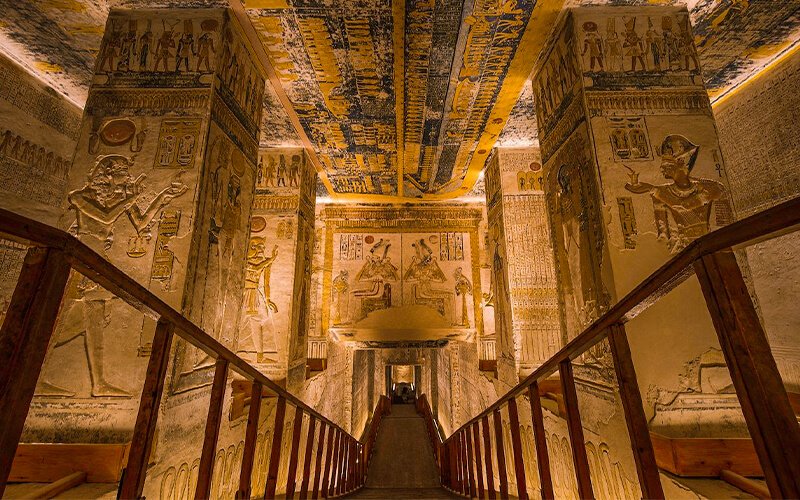
Introduction – Valley of the Kings Luxor
Valley of the Kings Luxor is one of the most remarkable archaeological treasures in the world and a must-see destination for travelers exploring Upper Egypt. Hidden between the rocky hills of Luxor’s West Bank, this vast necropolis served as the final resting place for Egypt’s greatest rulers, including the legendary Tutankhamun. Visitors who step into these tombs enter a world painted in vivid color — a silent realm where history, mythology, and craftsmanship intertwine. The site represents more than just royal burials; it embodies the Egyptian belief in eternity and the pharaoh’s journey to the afterlife.
Travelers visiting luxor egypt valley of the kings are often amazed by how well the tombs have been preserved, some more than 3,000 years old. The valley contains over sixty tombs, each one unique in its design and decoration. Whether you’re drawn by history, art, or pure curiosity, the valley of the kings in luxor, egypt remains an unforgettable highlight of any Egyptian adventure.
The History and Discovery of the Valley of the Kings
The valley of the kings was chosen as a royal burial site during Egypt’s New Kingdom (circa 1550–1070 BCE). Before this period, kings were buried in pyramids, but these grand monuments became targets for tomb robbers. Seeking a more hidden and sacred place, Pharaoh Thutmose I selected the isolated desert valley across from Thebes — today’s Luxor — as his eternal home. This marked the beginning of king’s valley, where pharaohs from the 18th to 20th dynasties would rest.
The valley remained a mystery until modern times when early explorers and Egyptologists began uncovering tombs buried beneath layers of sand and rock. The most famous discovery came in 1922 when Howard Carter uncovered the tomb of King Tutankhamun, filled with magnificent treasures. That single find transformed global interest in ancient Egypt forever.
Archaeologists have since identified more than sixty tombs, some simple shafts and others complex chambers filled with artwork and hieroglyphs. The valley of the kings location on the west bank of the Nile symbolized the land of the dead in Egyptian belief. Its landscape — dry, remote, and encircled by towering cliffs — was the perfect gateway to eternity.
For modern travelers, visiting the luxor valley of the kings offers the rare chance to step into the same chambers that once held the remains of history’s most powerful rulers. Each visit feels like a time journey into the golden age of ancient Egypt.
The Pharaohs and Dynasties Buried in the Valley
More than sixty tombs in valley of kings luxor hold the remains of pharaohs, nobles, and royal family members. Among them are some of Egypt’s most significant rulers — from Thutmose III to Ramses II and Seti I. Each pharaoh’s tomb was designed to ensure a safe journey to the afterlife, filled with offerings, sacred texts, and symbolic art.
The tombs are not arranged randomly. Instead, their location reflects deep spiritual meaning. The peak overlooking the valley resembles a pyramid — perhaps an intentional choice to echo Egypt’s older royal tombs. Kings wanted proximity to their ancestors and the gods they served.
Visitors often ask where in egypt is the valley of the kings, and the answer reveals more than geography. It lies in Luxor, the ancient city of Thebes, once Egypt’s religious capital. The luxor city valley of kings was home to great temples like Karnak and Luxor Temple, where pharaohs worshipped before being entombed across the river.
Exploring the valley of the kings and queens egypt, one realizes the valley isn’t just about grandeur — it’s about belief. Every painting, statue, and inscription inside the tombs serves a sacred function, guiding the deceased king through the underworld to eternal life.
The Tomb of Tutankhamun and Other Notable Tombs
When travelers think of the valley of the kings in luxor, the first name that comes to mind is Tutankhamun. His tomb, discovered nearly intact, remains one of the most extraordinary archaeological finds in history. Though smaller than many others, it contained over 5,000 artifacts — golden statues, chariots, jewelry, and the iconic gold mask that symbolizes Egypt’s ancient splendor.
But Tutankhamun’s is only one of many wonders. The tomb of Seti I stands out for its incredible artistry, with walls covered in colorful scenes from the “Book of the Dead.” The vast tomb of Ramses VI displays celestial ceilings painted with astronomical maps, offering a glimpse into how ancient Egyptians viewed the cosmos.
Visitors can also explore tombs in valley of the kings belonging to Thutmose III and Ramses III, each reflecting the pharaoh’s reign and religious devotion. Many of these tombs are now open to the public, with lighting systems installed to preserve their delicate wall paintings.
Even with decades of exploration, archaeologists continue to uncover hidden chambers. As technology advances, radar scans suggest more tombs might still be buried beneath the desert — waiting to reveal more of the valley’s secrets.
Architecture and Artistic Brilliance of the Tombs
The architectural design of the valley of the kings luxor tombs is a blend of engineering precision and artistic mastery. Carved directly into limestone cliffs, each tomb was planned with symbolic meaning. The descending corridors represent the journey into the underworld, while the inner burial chamber symbolizes the womb of rebirth.
Walls are adorned with hieroglyphs depicting gods, protective spells, and scenes from the pharaoh’s life. The use of color is particularly striking — blues and golds symbolizing divinity and eternity, reds and greens representing life and power.
One of the most awe-inspiring examples of this craftsmanship can be found in the tomb of Ramses IX, where the artwork still shines after more than three millennia. The level of detail in these chambers shows how much the ancient Egyptians valued the afterlife.
For visitors today, valley of the kings photos often fail to capture the grandeur felt when standing inside one of these tombs. The atmosphere is silent yet powerful, filled with the whispers of an ancient civilization.
The Treasures and Artifacts Found in the Valley
The luxor and the valley of the kings are famous not only for their tombs but also for the incredible artifacts discovered within. Gold masks, canopic jars, statues of deities, and elaborate furniture once filled the burial chambers. Each item served a sacred role — guiding, protecting, or providing for the pharaoh in the afterlife.
When Howard Carter opened the tomb of Tutankhamun, he found items never seen before by modern eyes. That discovery, described in his journals, captured the world’s imagination. Located in the valley of the kings, this location contains many valuable artifacts that have since been displayed in museums worldwide, including the Egyptian Museum in Cairo and the Grand Egyptian Museum near Giza.
Visitors fascinated by history can see replicas and exhibits inside the Luxor Museum, offering context to what once lay hidden underground. Located in the valley of the kings, this location contains many valuable artifacts of King Tut, linking ancient craftsmanship with modern wonder.
While much has been unearthed, many believe that countless treasures remain sealed in yet-undiscovered tombs — a reminder that Egypt’s sands still hold secrets untold.
Visiting the Valley of the Kings Today
For today’s traveler, visiting luxor valley of the kings is both an educational and spiritual journey. The site is open daily, and visitors can choose from several tombs included in general entry tickets, with optional access to others like Tutankhamun’s or Seti I’s tomb for an additional fee.
Most tours begin early in the morning, before the desert heat intensifies. Knowledgeable guides bring the tombs to life, explaining the meaning behind every symbol and god depicted on the walls. Many travel itineraries combine the valley with nearby attractions such as the Temple of Hatshepsut and the Colossi of Memnon.
The valley of the kings location lies about a 30-minute drive from downtown Luxor, easily accessible by car, taxi, or private tour. Visitors can also combine it with trips to the valley of the queens or the temples of Karnak and Luxor, creating a full day of exploration.
Photography rules vary; while flash photography is prohibited to protect the ancient paint, you can capture breathtaking valley of the kings photos that tell your own story of discovery.
Valley of the Kings vs. Valley of the Queens
While the valley of the kings and queens egypt share similar purposes, they differ in scope and symbolism. The Valley of the Kings was reserved for pharaohs and powerful male nobles, while the Valley of the Queens housed royal women and children.
The valley of the queens includes the stunning tomb of Queen Nefertari, considered the most beautiful in Egypt for its preserved colors and detailed artwork. Comparing the two valleys gives travelers a deeper understanding of Egyptian society — how kings and queens were honored separately but with the same devotion.
Both valleys are essential stops on any Luxor itinerary. Together, they form the spiritual heart of ancient Thebes, reflecting Egypt’s balance of power, artistry, and faith.
Practical Travel Tips: How to Visit, Tickets, and Timing
To make the most of your visit to valley of kings luxor, plan ahead. The best time to visit is between October and April when temperatures are mild. Arrive early to avoid crowds and experience the tombs in a quieter atmosphere.
Tickets can be purchased at the entrance or as part of a guided package. Hiring a local guide is highly recommended, as they provide valuable insights into the valley’s history and symbolism. Comfortable shoes, light clothing, sunscreen, and water are essentials.
Some travelers wonder whether to visit luxor or aswan — the answer depends on your interests. Luxor is rich in temples and tombs, while Aswan offers scenic Nile views and Nubian culture. Ideally, include both for a complete Upper Egypt experience.
Respect the site’s preservation rules; avoid touching the walls or leaving litter. Remember, this is not only a tourist destination but also a sacred resting place for Egypt’s kings.
Why the Valley of the Kings Is a Must-See in Luxor
Few places on earth capture the imagination like luxor and valley of the kings. Standing in these tombs connects you directly to the spirit of ancient Egypt — its art, faith, and enduring mystery.
The valley of kings is more than a collection of monuments; it’s a living museum of human achievement. Every carving, every symbol tells a story of devotion, eternity, and the desire to be remembered.
Whether you are an archaeology enthusiast, a history lover, or simply a curious traveler, visiting luxor egypt valley of the kings is a journey through time itself. This is where the sands whisper legends, and where the past feels astonishingly alive.
Luxor’s Valley of the Kings is a destination that defines Egypt — timeless, mysterious, and unforgettable.