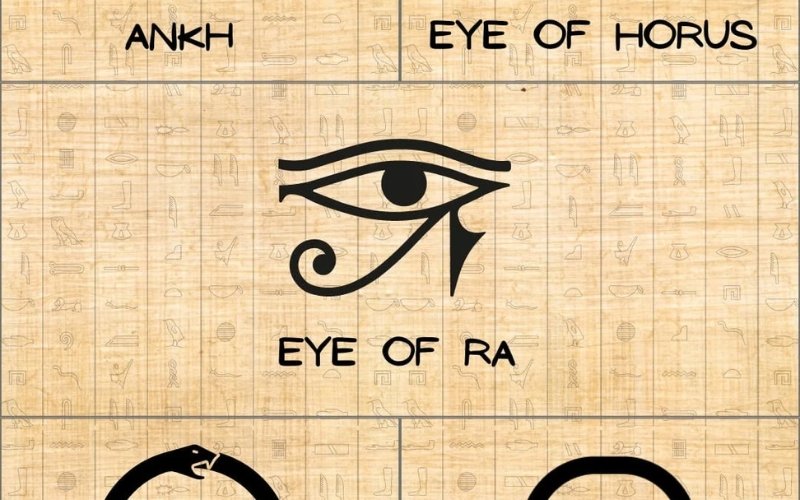
26 Famous Ancient Egyptian Symbols and Their Meanings have fascinated travelers, historians, and enthusiasts for centuries. From hieroglyphic inscriptions on temple walls to amulets found in tombs, these symbols reveal the spiritual, cultural, and artistic essence of ancient Egypt. Understanding egyptian symbols allows travelers to decode the messages left by the Egyptians, whether in sacred temples, museums, or iconic monuments like the Pyramids of Giza and Luxor Temple.
Each egyptian symbol carried specific meanings. For example, some were protective, others represented life, death, or divine power. The symbols of ancient egypt were central to Egyptian art, daily life, and religious practices. Many travelers are intrigued by egyptian symbols and meanings, eager to know what they represented in ancient rituals, hieroglyphics, and royal iconography.
Exploring ancient egyptian symbols provides insights into a civilization that thrived for over three millennia. Each symbol, whether simple or intricate, conveys a story, a belief, or a cosmic principle. From the iconic Eye of Horus to the sacred Ankh, the egyptian iconography reflects a worldview where life, death, and the divine were intimately connected. Travelers visiting Egypt can find these symbols in temples, tombs, museums, and even modern interpretations across Egyptian culture, allowing them to experience the living legacy of this ancient civilization.
This guide will present 26 of the most famous ancient egypt symbols and their meanings, giving readers a clear understanding of their significance and inspiring curiosity for a deeper exploration of Egypt’s rich heritage.
The Ankh – Symbol of Life
The egyptian symbol of life, known as the Ankh, is perhaps the most recognized Egyptian symbol. Shaped like a cross with a loop at the top, it represented eternal life and the life-giving power of the sun. Often held by gods and pharaohs in egyptian iconography, the Ankh symbolized divine protection and vitality.
Travelers exploring tombs in the Valley of the Kings or temples in Karnak will notice the Ankh repeatedly carved alongside other egyptian symbols. It was not just spiritual—it was practical. Amulets shaped like the Ankh were worn to ensure health and safety. Ancient egyptian symbols often combined the Ankh with other motifs, linking life, regeneration, and spiritual power.
The Ankh’s meaning resonates today in jewelry and art inspired by egyptian symbols and their meanings. Its universal appeal comes from its simplicity and profound symbolism, making it an essential motif for travelers to recognize when exploring hieroglyphics symbols across Egypt.
The Eye of Horus – Protection and Healing
Known as the egyptian symbol of protection, the Eye of Horus was believed to provide safety, health, and restoration. Representing the falcon god Horus, it was widely used in amulets and egyptian signs in tombs and temples. Travelers encountering the eye of horus in museum collections or temple carvings learn that it symbolized the triumph of order over chaos and the preservation of life.
In addition to protection, the Eye of Horus was connected to mathematics and measurement in ancient egyptian symbols. Its parts represented fractions, which were used in daily life, demonstrating how egyptian symbolism integrated spiritual and practical applications. Travelers can appreciate this when observing symbols of egypt that merge artistry, religion, and science.
The Scarab – Rebirth and Transformation
The scarab meaning in Egyptian culture was tied to the daily renewal of the sun and rebirth. The dung beetle, observed rolling balls of earth, inspired the scarab beetle symbolism. Scarabs were used in amulets, ancient egyptian symbols and meanings, and placed in tombs to guide souls through the afterlife.
Travelers exploring Luxor Museum or the Egyptian Museum in Cairo will notice scarabs carved in stone or made as jewelry, representing protection and regeneration. The egyptian scarab beetle symbolized both earthly life and spiritual transformation, linking it to divine powers such as Khepri, the god of creation. Understanding scarab spiritual meaning enhances the experience of discovering Egypt’s religious and cultural depth.
The Djed Pillar – Stability and Strength
The Djed symbol represented stability, endurance, and the backbone of Osiris, the god of the afterlife. Often depicted in tomb paintings, amulets, and temple carvings, the Djed served as a symbol of eternal strength and protection. Travelers can spot this ancient egyptian symbol in Luxor, Saqqara, and other prominent sites.
The symbol of egypt not only conveyed physical and spiritual stability but also symbolized continuity in governance and royal power. Egyptian symbols meaning included the Djed alongside the Ankh and Was scepter, demonstrating a combination of life, strength, and divine authority. Tourists exploring egyptian iconography will notice the repeated use of this pillar in religious and funerary contexts.
The Was Scepter – Power and Authority
The Was scepter symbolized authority and power. Often held by gods and pharaohs in ancient egypt symbols, it represented the ruler’s dominion over order and chaos. Travelers visiting temples and tombs see the Was scepter depicted in stone reliefs, emphasizing divine support for kingship.
In egyptian symbols and meanings, the Was scepter often accompanies the Ankh and Djed pillar, creating a triad of life, stability, and authority. This combination was key in ancient egyptian symbols and meanings, highlighting the intertwined nature of spiritual and political life. Recognizing the egyptian symbol of the Was scepter enriches the traveler’s understanding of temple carvings and royal artifacts.
The Scarab with Sun Disk – Creation and Renewal
The scarab egyptian with a sun disk combines the symbolic power of regeneration and solar energy. Khepri, the god associated with the morning sun, was often depicted as a scarab pushing the sun across the sky. Travelers exploring Karnak and Luxor can identify this ancient egyptian symbols motif carved on walls and amulets.
The scarab beetle egypt reinforces themes of rebirth, continuity, and divine guidance. It’s a key egyptian symbol used in tombs to ensure protection in the afterlife. Travelers interested in hieroglyphics symbols can see how this motif integrates visual storytelling with spiritual meaning.
The Feather of Ma’at – Truth and Justice
The egyptian symbol of truth, the feather of Ma’at, represented order, balance, and morality. In funerary texts, the heart of the deceased was weighed against Ma’at’s feather, determining their worthiness in the afterlife. Travelers in the Egyptian Museum or tombs in the Valley of the Kings will encounter this egyptian iconography.
Symbols of egypt like the Ma’at feather illustrate the Egyptians’ focus on ethical living, justice, and cosmic order. Recognizing the feather in ancient egyptian symbols and meanings helps travelers understand the moral and spiritual codes that guided daily life.
The Eye of Ra – Protection and Power
The egyptian symbol of protection, the Eye of Ra, represents the sun god’s wrath and power. While similar to the Eye of Horus, the Eye of Ra emphasized divine authority and the ability to ward off enemies. Travelers visiting temples and tombs can find this egyptian symbol carved on walls and in statues.
Egyptian symbols and their meanings frequently used the Eye of Ra to protect the pharaoh and maintain cosmic order. Observing this symbol in ancient egypt symbols enriches the traveler’s understanding of Egyptian mythology and iconography.
The Lotus – Creation and Rebirth
The egyptian symbol of life, the lotus flower, represented creation, rebirth, and the sun. In ancient egyptian symbols and meanings, the lotus often appeared in tombs, temple decorations, and amulets. Travelers exploring Luxor Temple or the Egyptian Museum can identify the lotus motif, which symbolizes emergence from the primordial waters and eternal renewal.
The lotus combines aesthetic beauty with deep spiritual significance, making it one of the most enduring egyptian symbols.
The Cartouche – Royal Identity
The ancient egypt symbol, cartouche, is an oval shape enclosing a royal name. Travelers exploring tombs and temples will recognize this symbol of egypt as a mark of divine protection for pharaohs. The cartouche, part of egyptian iconography, reinforced the legitimacy and authority of rulers while preserving their names for eternity.